When both employers and candidates are using AI, the real advantage comes from seeing and hearing the person behind the application.
The hiring process is changing again.
For years, the resume sat at the center of candidate evaluation. Employers reviewed resumes, looked at cover letters, and used written screening questions to decide who should move forward. That process made sense when text-based applications carried more weight and when employers had fewer ways to assess candidates early.
That is no longer the case.
Today, hiring teams are using AI to review resumes, shortlist applicants, and support parts of the interview process. At the same time, job seekers are also using AI to write resumes, create cover letters, and answer screening questions. The result is a new hiring environment where text-based applications are easier to polish than ever.
That does not mean AI is bad. It means the old resume-first model is under pressure.
As both sides of hiring adopt AI, employers need a stronger way to evaluate the person behind the application. That is why the future of hiring is moving from resumes to video-first talent evaluation.
Resume-First Hiring Is Under Pressure
The traditional hiring model starts with documents. Employers collect resumes, review experience, compare education, and look for the right keywords. From there, they may review a cover letter or ask written screening questions to narrow the field.
But the more AI becomes part of the application process, the weaker these written materials become as a standalone signal.
A resume can now be rewritten, refined, and optimized in minutes. A cover letter can sound polished and professional even if the candidate put very little original thought into it. Screening answers can be drafted with the help of AI just as easily as resumes can.
That means hiring teams are often evaluating writing that may not reflect the candidate’s real communication ability, professional judgment, or depth of experience.
The issue is not that resumes have no value. The issue is that resumes and written answers no longer tell the full story.
AI Is Now on Both Sides of Hiring
AI is now heavily involved on both sides of the hiring process.
Employers are using AI to:
- review resumes
- shortlist candidates
- support interview analysis
- help process large volumes of applicants
Job seekers are using AI to:
- write or improve resumes
- create cover letters
- answer screening questions
- prepare job applications faster
This changes the nature of hiring.
In the past, written materials were often seen as a stronger reflection of the candidate’s own thinking and communication. Today, a large part of the application can be created, improved, or polished with AI assistance.
That creates a new challenge for employers. If the resume is strong, is it because the candidate is truly strong, or because the candidate is good at using AI to produce a polished application?
That is not always easy to tell from text alone.
Why Text-Based Applications Are Becoming Weaker Signals
Text-based applications are still part of the hiring process, but they are becoming weaker as primary indicators of quality.
If an employer asks a text-based screening question about experience, a candidate can easily use AI to generate a convincing answer. If an employer asks for a short written explanation of skills, AI can help structure the response and make it sound more polished. Even when the candidate has some real experience, the final output may overstate clarity, confidence, or depth.
That creates a mismatch between the application and the actual person behind it.
A written response may sound strong, but it does not prove whether the person can speak clearly, explain their experience naturally, or respond with confidence in a real conversation.
This is especially important in remote and global hiring, where communication ability matters greatly. If the role requires the candidate to collaborate remotely, interact with teams, or communicate across borders, then written text alone is not enough.
Employers need a way to assess how candidates actually present themselves.
The Problem With AI Reviewing AI-Generated Content
This problem is easy to understand when viewed from both sides of the hiring process.
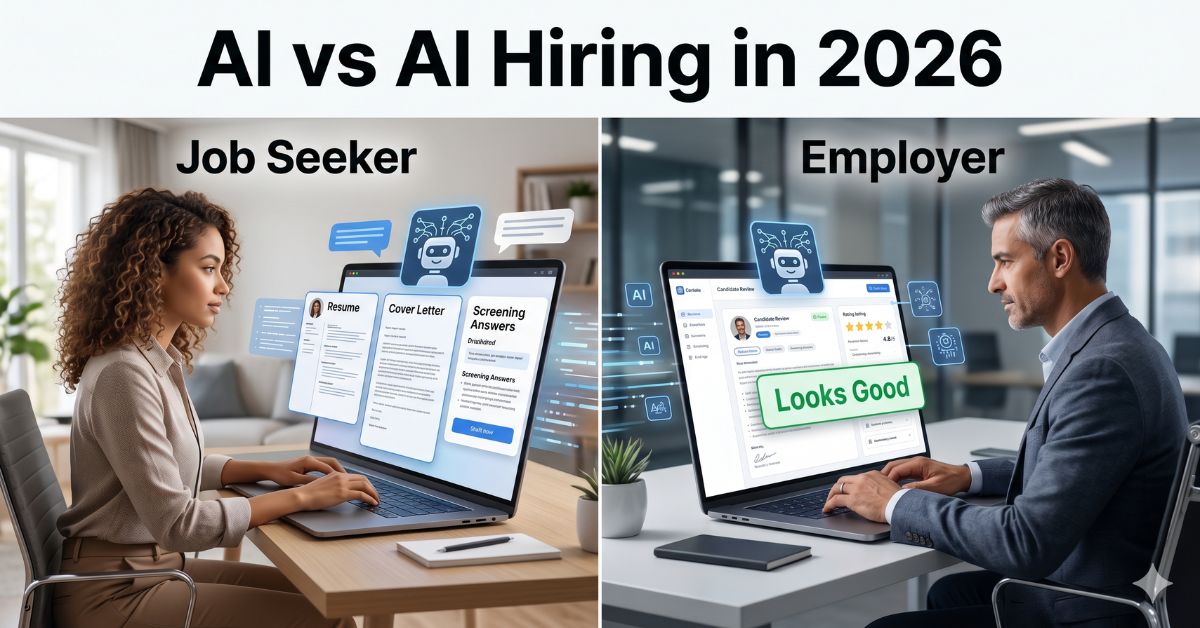
On one side, a job seeker uses AI to build a resume, write a cover letter, and answer screening questions. On the other side, the employer uses AI to review the same materials and says, “Looks good.”
That is the problem.
When AI-generated or AI-enhanced applications are being reviewed by AI-assisted screening systems, employers can end up with a polished version of the candidate rather than a clear understanding of the candidate.
Everything may look right on paper.
The resume reads well.
The cover letter sounds professional.
The answers seem thoughtful.
But none of that guarantees that the candidate can actually speak with authority, communicate clearly, or explain their experience in a convincing and professional way.
This is one of the biggest reasons the hiring process needs a stronger human signal earlier in the funnel.
Why Video Cuts Through the Noise
Video-first evaluation gives employers something written applications cannot.
It helps them see how candidates communicate. It helps them hear how candidates talk about their experience. It gives them a clearer view of professionalism, confidence, and authenticity.
A candidate can use AI to polish written answers, but video makes it much harder to hide whether they can actually explain their experience.
With video, employers can better assess:
- whether someone speaks naturally about their experience
- whether they can answer questions with clarity
- whether they sound confident and credible
- whether they can use industry language appropriately
- whether they appear to be exaggerating
- whether they present themselves professionally
This is not about replacing every part of hiring with video. It is about strengthening the evaluation process earlier.
Video helps employers move beyond static documents and get closer to the real person much sooner.
Video Shows More Than a Resume Can
A resume can list achievements, but video shows how a person explains them.
A cover letter can claim strong communication, but video reveals whether that communication is actually there.
A written answer can say the candidate has deep experience, but video helps show whether they can speak with authority, answer clearly, and handle real questions without relying on polished text.
This matters because communication is not just a soft skill in remote hiring. It is one of the most important signals.
If a role involves remote collaboration, client work, internal team communication, or independent execution, employers need confidence that the candidate can express themselves clearly and professionally.
That is why video is becoming more valuable. It adds context, authenticity, and practical evaluation power.
Video Should Come Earlier, Not Later
Many hiring teams already use video somewhere in the process, but they often introduce it too late.
In many workflows, video only appears after candidates are shortlisted. That means hiring teams spend time reviewing applications, ranking resumes, and moving candidates through the funnel before they have actually seen or heard the person.
Remote Recruit’s model is different because it starts with video.
That earlier video layer gives employers a stronger signal much sooner. Instead of relying only on a resume and written materials to decide who deserves deeper attention, employers can begin with a clearer understanding of the candidate’s communication style, presence, and ability to speak about their experience.
This is one of the biggest shifts in the future of hiring.
The question is no longer whether video belongs in the process. The question is how early it should appear.
The answer is clear: earlier.
The Instant Apply Problem
Another reason video-first hiring matters is the rise of instant apply systems.
Candidates can now apply to large numbers of jobs with very little effort. One click can send an application to role after role, sometimes with only minor edits.
This makes job applications easier for candidates, but it creates a serious screening challenge for employers.
Hiring teams now deal with far more applicants than before. More applications do not always mean more qualified candidates. In many cases, they mean more low-effort applications, more noise, and more written material to review.
That puts even more pressure on the screening process.
If employers are receiving ten times more applications because candidates can apply instantly, then reviewing resumes alone becomes even less efficient. The faster people can apply, the more important it becomes to have a way to evaluate seriousness, communication, and quality earlier.
Video-first evaluation helps employers cut through that noise.
How Remote Recruit Supports Video-First Hiring
Remote Recruit should not be seen as just another job board.
Its value is in helping employers evaluate candidates differently.
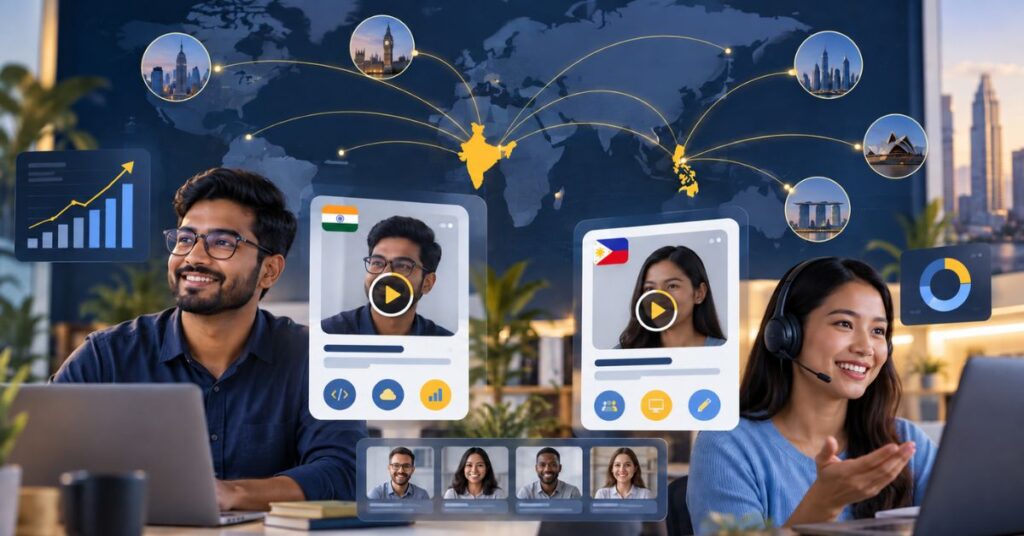
By starting with video-first candidate profiles, Remote Recruit gives employers a better way to assess applicants beyond the resume. It helps bring communication, professionalism, and authenticity into the hiring process earlier, rather than waiting until late-stage interviews.
That is especially useful in remote and global hiring, where employers need more than polished text to make informed decisions.
Instead of relying entirely on resumes, cover letters, and written screening questions, hiring teams can use video to build a stronger initial view of the candidate.
That is the direction hiring is moving toward.
Conclusion
The future of hiring is not resume-only.
Resumes, cover letters, and written screening answers still have a role, but they are no longer strong enough to stand on their own in an AI-shaped hiring environment. When employers use AI to screen and job seekers use AI to apply, written content becomes easier to polish and harder to trust as the main signal of quality.
That is why video-first talent evaluation matters.
Video helps employers assess communication, confidence, professionalism, and real experience earlier. It helps them move closer to the real person behind the application. It also helps them deal with the growing noise created by instant apply systems and AI-assisted applications.
The future of hiring is not about abandoning technology. It is about improving how technology supports better decisions.
And increasingly, that means moving from resume-first hiring to video-first talent evaluation.
See More Than the Resume
If written applications are getting easier to polish, employers need a better way to evaluate real candidates. Remote Recruit helps hiring teams go beyond resumes with video-first candidate profiles designed for modern remote hiring.
Explore Remote Recruit and bring earlier, stronger candidate evaluation into your hiring process.