Remote work may offer flexibility, but the candidates who stand out are the ones who show communication, discipline, and professionalism from the start.
Remote work can feel more flexible than traditional office work, but it still requires professional standards.
That is one of the most important ideas job seekers need to understand. A remote role is not an excuse to be casual, unprepared, or unclear. In many ways, remote hiring puts even more attention on how you communicate, how you present yourself, and whether you can work independently without direct supervision.
If you want to position yourself for remote-first companies, you need to do more than submit a resume. You need to show that you can communicate clearly, stay disciplined, use modern tools, and present yourself like someone who is ready to work in a professional environment.
That is what helps job seekers stand out.
English and Communication Matter
English and communication are exceptionally important for remote job seekers.
For many remote roles, especially the ones connected to Western companies or international teams, English is the language of business. If you want to maximize your opportunities as a remote job seeker, strong English communication can make a major difference.
But this is not only about knowing vocabulary or grammar. It is also about being able to communicate professionally. Employers need to see that you can express your thoughts clearly, respond to questions directly, and interact with confidence in a work setting.
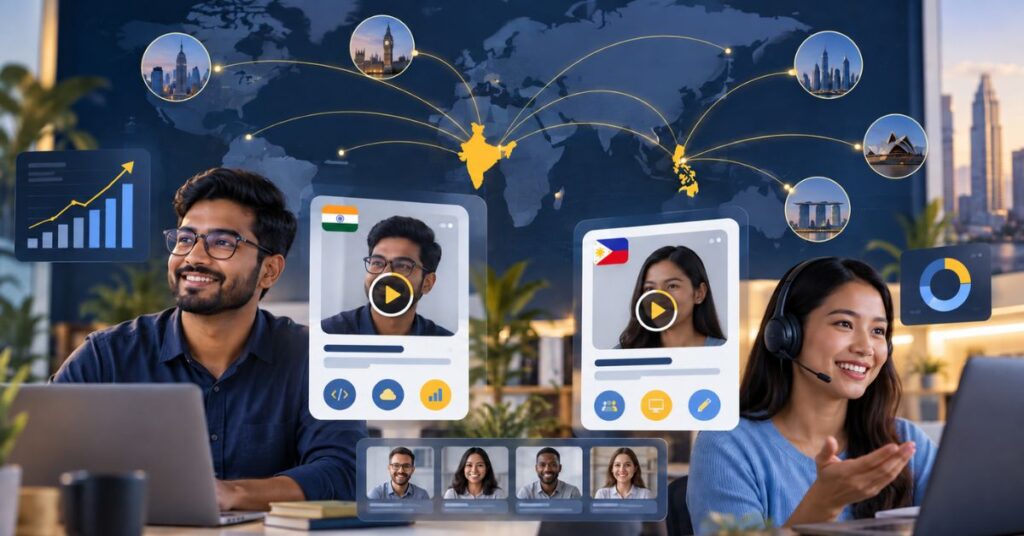
In remote hiring, this matters even more because so much of the working relationship depends on communication. If you are not in the same office, then your ability to write clearly, speak clearly, and collaborate across calls and messages becomes part of your value.
Strong communication is not a small advantage. It is one of the biggest ways a job seeker can stand out.
Communication Is More Than Just Knowing English
It is possible to know English and still not present yourself well.
Communication is also about how you carry yourself. Can you explain your experience clearly? Can you answer a question without sounding confused? Can you talk about your work with confidence and professionalism?
Remote-first companies are not only listening for words. They are paying attention to whether you sound prepared, whether you seem professional, and whether you can represent yourself well in a remote setting.
That means job seekers should focus on:
- speaking clearly
- answering directly
- explaining their experience in a simple and confident way
- avoiding vague or confusing answers
- presenting themselves like professionals
The way you speak about your work often shapes how employers view your readiness for the role.
Be Patient When Looking for the Right Role
Job seekers also need patience.
Many candidates make the mistake of jumping at the first opportunity they find, especially when searching for remote work. But positioning yourself well also means being selective and thinking long term.
Not every remote job is the right fit. Some roles may not match your skills. Others may not be stable or worthwhile. If you move too quickly just because the role is remote, you may end up in a position that does not help your long-term growth.
Patience matters because the right role is worth waiting for.
A better approach is to keep improving your profile, keep applying thoughtfully, and look for opportunities that match your abilities and goals. Remote work is a serious career path, not just a shortcut to flexibility.
Discipline Is Non-Negotiable in Remote Work
One of the biggest concerns employers have about remote workers is discipline.
In a remote role, it is easier for people to lose focus, become inconsistent, or fail to manage their time well. That is why employers want candidates who show they can work independently and stay productive without constant supervision.
If you want to stand out to remote-first companies, you need to show that you can stay focused and professional throughout the workday.
That includes:
- managing your time well
- responding consistently
- staying organized
- following through on tasks
- showing reliability
- proving that you can work without being monitored every minute
Remote work gives people more freedom, but with that freedom comes more responsibility. Employers want people they can trust to deliver.
Focus on Roles That Are More Likely to Be Remote
Not every role is equally suited for remote work.
The practical advice is simple: if you want a remote job, focus on roles and departments that are more likely to be remote. Some jobs are naturally more remote-friendly than others, while some roles are more tied to in-person operations.
Some sales and operational roles may still require in-person work, while roles like social media, customer service, software development, and other screen-based roles are often more remote-friendly.
For example, roles in areas like:
- social media
- customer service
- software development
- digital work
- online support
- similar screen-based roles
may be more likely to offer remote opportunities than heavily operational or on-site roles.
This does not mean other roles are impossible. It means job seekers should be realistic and strategic. If your goal is to work remotely, focus on roles where employers are already more open to remote hiring.
That gives you a better chance of success.
Build Strong Tech and Collaboration Skills
Remote work depends on technology.
Remote workers should be comfortable using tools such as Slack, Zoom, Google Hangouts, email, and general collaboration technology. If you want to work remotely, you need to be comfortable using these tools as part of your daily work.
Remote-first companies want people who can step into a digital work environment and contribute immediately. They do not want candidates who struggle with basic communication tools or need constant help with online workflows.
Job seekers should work on:
- video calls
- chat and messaging platforms
- email communication
- online collaboration tools
- digital research skills
- general computer comfort and confidence
Being able to use technology smoothly sends a strong signal that you are ready for remote work.
AI Skills Matter Too
AI skills are also becoming more important.
Many job seekers still do not know how to use AI tools effectively. Candidates who can work with modern technology, adapt quickly, and use AI as part of their workflow may be more valuable to employers.
This does not mean using AI to fake your way through the hiring process. It means understanding how AI tools can support productivity, research, communication, and collaboration.
Remote-first companies are likely to value people who can learn fast and work with the latest tools. If you can show that you are comfortable with modern work technology, that can help differentiate you from other applicants.
AI skills, when combined with strong communication and discipline, can make you a more attractive candidate.
Keep Up Appearances
This is one of the most important points for remote job seekers.
A lot of people think that because a job is remote, appearance no longer matters. That is a mistake.
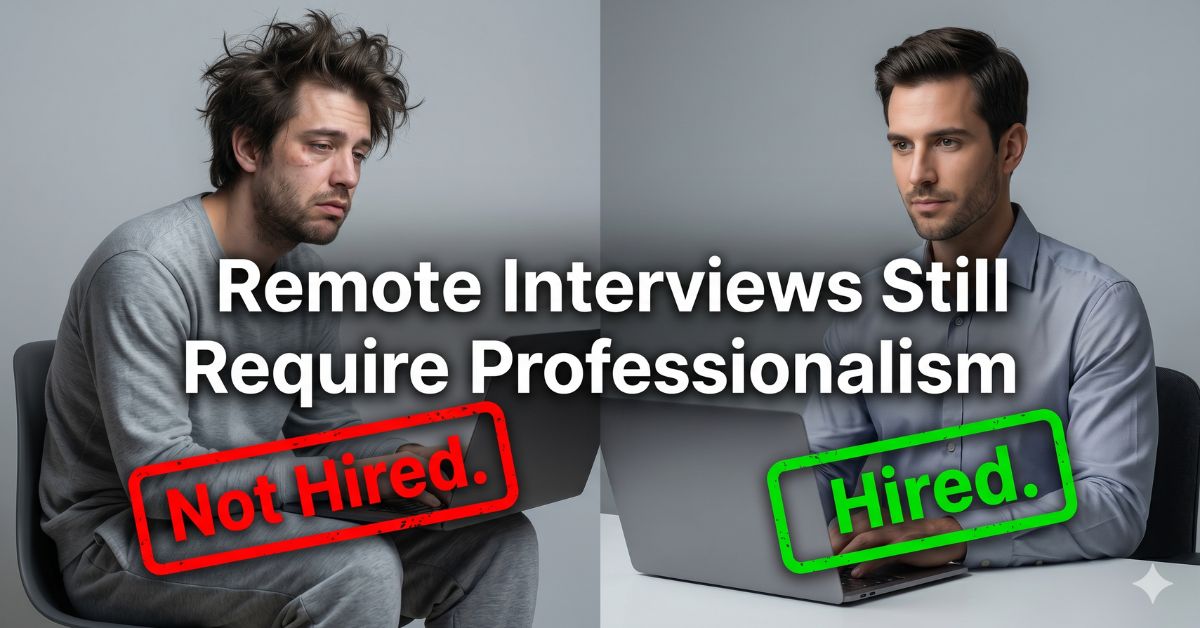
Remote work is still professional work. If you show up to an interview looking like you just got out of bed, wearing sweats, with messy hair and low energy, you are sending a message. You are telling the employer that you may not take the opportunity seriously.
By contrast, if you show up looking ready for work, you create a very different impression.
Job seekers should treat remote interviews like office interviews. That means:
- dressing professionally
- looking well prepared
- being presentable on camera
- sitting properly
- making a strong first impression
- showing respect for the opportunity
How you present yourself matters because employers are evaluating whether you are ready to represent yourself and the company in a professional setting.
Remote does not mean careless.
Show That You Are Ready to Work Remotely
When job seekers position themselves well, they show more than just interest in flexibility. They show readiness.
That readiness includes communication, discipline, patience, technical comfort, and professionalism. It shows that you can handle a remote environment and still perform at a high level.
This is especially important because employers hiring remotely are often looking for signals of maturity and self-management. They want to know that if they hire you, you will be able to work independently, collaborate effectively, and maintain standards even when no one is physically around you.
The strongest candidates do not only say they want remote work. They show that they know how to succeed in it.
How Remote Recruit Helps Job Seekers Stand Out
Remote Recruit should be seen as more than a place to upload a resume.
Its value for job seekers is that it helps them show more of who they are. Instead of relying only on written text, job seekers can present communication skills, confidence, professionalism, and readiness for remote work in a stronger way.
That matters because a resume alone does not always show how a person communicates or how seriously they take the opportunity.
Remote Recruit gives candidates a better way to stand out by helping them present a stronger profile and show employers more than a list of credentials.
For remote job seekers, that can make a real difference.
Conclusion
If you want to stand out to remote-first companies, you need to think beyond the resume.
You need to communicate clearly. You need to stay disciplined. You need to focus on remote-friendly roles, build strong tech skills, understand modern tools, and show that you can operate professionally in a remote setting.
Most of all, you need to present yourself like someone who is ready to work.
The best remote candidates do not treat remote work casually. They treat it as a serious professional opportunity and show employers that they are prepared for it.
That is how job seekers position themselves successfully for remote-first companies.
Show Employers More Than a Resume
Remote-first companies want candidates who can communicate well, present themselves professionally, and prove they are ready for remote work. Remote Recruit helps job seekers build a stronger profile and stand out beyond written applications alone.
Create your Remote Recruit profile and show employers why you are ready for remote work.