Global hiring is giving companies access to talent across countries and time zones instead of limiting them to local candidates. For staffing firms and offshore recruitment agencies, this creates a major opportunity to help employers find skilled people wherever they are based. It also creates a screening challenge. Recruiters may need to evaluate large numbers of candidates across different markets while generative AI makes it easier for applicants to create polished resumes, cover letters and written responses. Written applications still matter, but they may no longer reveal enough about the person behind them. This is where AI-supported matching, candidate video profiles and human recruiter judgement can work together.
Global Employers Are Looking Beyond Local Talent Markets
Access to talent has become a strategic issue for many businesses. The World Economic Forum’s Future of Jobs Report 2025, based on more than 1,000 employers representing over 14 million workers across 55 economies, found that 63% of employers see skills gaps as a major barrier to business transformation. The same research found that 47% of employers consider tapping into more diverse talent pools a promising way to improve talent availability, while 27% identified remote work across national borders as another way to broaden access to talent.
These figures do not mean every employer is moving jobs offshore. They do show that companies are increasingly willing to look beyond traditional local hiring channels when the right skills are difficult to find. Offshore staffing agencies can help employers understand unfamiliar talent markets, identify suitable candidates and create a more manageable shortlist from a larger international pool.
The Philippines Shows the Scale of the Offshore Opportunity
The Philippines remains one of the world’s major IT-enabled services and business process management markets. The IT & Business Process Association of the Philippines reports an industry workforce of about 1.9 million people and roughly $40 billion in revenue. Philippine government reporting also indicated that sector revenue grew by about 5% in 2025 while employment increased by around 4% to 1.89 million workers.
The market is also moving beyond traditional contact-center and back-office work. OECD analysis notes growth in higher-value areas including global capability centers, healthcare information management, IT and software services. For recruitment agencies, this means offshore hiring is increasingly relevant across customer support, sales, finance, digital marketing, software development, data, administration, design and technical support. The opportunity is not simply to supply lower-cost labor; it is to help employers find professionals with the skills needed for distributed global teams.
Why Global Hiring Is Still Difficult
Being able to reach international candidates does not make recruitment simple. Employers and recruiters may still need to understand salary expectations, candidate qualifications, time-zone compatibility, communication requirements, employment or contractor arrangements, payroll processes, data privacy, labor regulations and remote onboarding. These considerations vary across countries and hiring models, which is one reason recruitment agencies remain valuable even as recruitment technology becomes more advanced.
A strong agency brings market knowledge, candidate relationships and human judgement to a process that can otherwise become difficult to manage. Technology can make sourcing and early-stage screening faster, but it does not replace appropriate employment, payroll or legal expertise where those services are required. The opportunity is to use technology to make recruitment expertise more scalable.
AI Is Changing the Value of the Written Application
Artificial intelligence is already part of the job-search process for many candidates. Gartner reported in 2025 that 39% of surveyed job applicants had used AI during the application process. Among those who used AI, 54% used it to generate resume or CV text and 50% used it to generate cover-letter text. There is nothing inherently wrong with using AI to improve grammar, organize experience or prepare for an interview, but it changes what recruiters can infer from a highly polished application.
Candidates with very different communication abilities or experience can now submit similarly polished written applications. A strong resume therefore remains useful, but it may provide less insight into how well someone can explain their experience in their own words. For staffing and recruitment agencies reviewing large offshore candidate pools, this creates a stronger need for additional signals earlier in the process. Bringing candidate video forward gives recruiters another way to understand the person behind the application, decide where their time should go and identify stronger candidates before arranging an initial screening call. Video can also remain useful later in the process when agencies present shortlisted candidates to clients.
Why Video Should Appear Earlier in Recruitment
Many recruitment firms already use video somewhere in the hiring process. The bigger opportunity is to move video closer to the beginning. A traditional process may involve reviewing a resume, conducting an initial screening call and only then requesting a video or presenting the candidate to a client. By that stage, the recruiter has already invested time deciding whether the person is worth progressing.
A video-first approach can work differently. After an application is submitted and potentially relevant candidates are identified through AI-supported matching, the recruiter can review the candidate’s profile and video before deciding whether an introductory call is necessary. This gives the recruiter a chance to hear the candidate explain their background and experience before scheduling another stage. Guidance from the Recruitment & Employment Confederation notes that asynchronous video interviews can support more structured and efficient screening while also stressing that video should remain part of a wider process with human oversight.
AI and Video Solve Different Problems
AI-supported matching and video recruitment solve different problems. AI can help manage scale by organizing candidate information and surfacing applicants whose profiles appear relevant to a vacancy. Video adds human context by allowing recruiters to hear candidates explain their experience directly. The recruiter still needs to validate information, ask follow-up questions and determine whether the candidate meets the role requirements, while the employer remains responsible for the final hiring decision.
This separation matters because responsible recruitment technology should support judgement rather than replace it. UK government guidance on responsible AI in recruitment warns that automated hiring systems can introduce risks involving bias, discrimination and digital exclusion, particularly when tools attempt to infer qualities from facial expressions, voice or other biometric signals. A better approach is to use AI to support search and matching, use video to provide additional candidate information, and keep recruiters responsible for evaluating job-related evidence.
How Offshore Recruitment Agencies Can Use Video Effectively
Video works best when it is structured and focused on information relevant to the role. Candidates applying for similar positions can be asked comparable questions about their experience, achievements, tools they have used or how they organize their work remotely. The initial video should also be concise enough that candidates are not required to complete a lengthy recorded interview before an employer has shown genuine interest.
The video should be reviewed alongside the candidate’s resume and professional profile rather than in isolation. This helps recruiters identify points that need deeper investigation. A short video can help answer whether a candidate is worth speaking to, while the live interview can focus on whether that candidate is genuinely suited to the employer, role and working environment.
How Remote Recruit Supports Offshore Recruitment Agencies
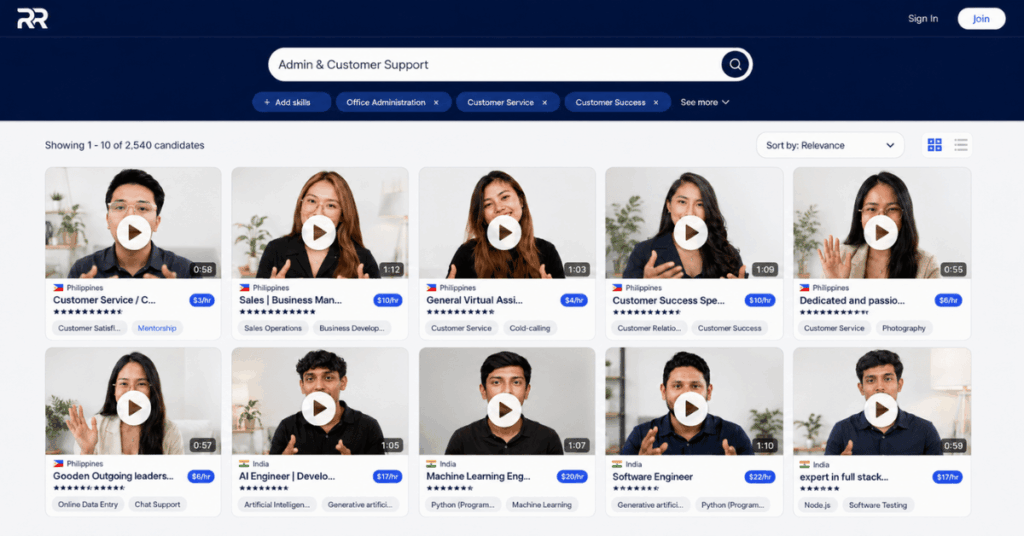
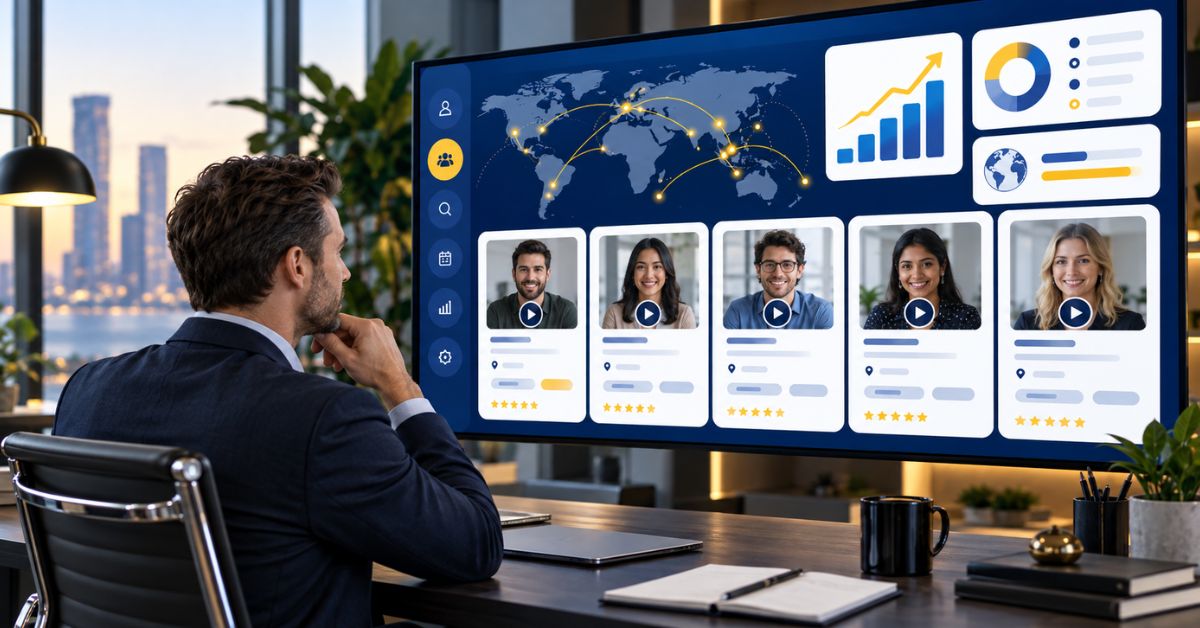
Remote Recruit is an AI-powered, video-first global hiring platform designed to help employers and recruitment businesses discover remote and offshore talent. The platform combines global candidate access, AI-driven matching and video resumes, giving recruiters an opportunity to review more than a traditional text application during the early stages of recruitment.
For staffing and offshore recruitment agencies, this can support a more efficient workflow. Agencies can identify potentially relevant candidates through AI-supported matching, review candidate information and video profiles, and decide which applicants should move into recruiter-led screening or client interviews. The purpose is not to remove recruiters from the process. It is to help them focus their time on stronger candidates while giving clients a richer view of the people being presented.
The Future of Offshore Recruitment Is Human-Led and Technology-Supported
Global talent pools are expanding, AI is changing how candidates apply, and recruitment teams are being asked to process more information without sacrificing quality. A resume will continue to be useful, but the strongest recruitment process may combine several signals rather than relying on one document alone.
AI can help narrow the candidate pool. Video can bring human context into the process earlier. Recruiters can investigate, validate and apply professional judgement, while employers make the final hiring decision. For offshore recruitment agencies, that combination offers a practical way to use technology without losing the human insight clients still depend on.
Find Global Talent With Remote Recruit
Remote Recruit helps staffing firms and employers discover global candidates through AI-supported matching and video profiles. Post a job for free and see more than the resume before deciding who moves to the next stage.
Researched Statistics and Sources