Hiring globally can sound simple in theory. Post a job online, find someone in another country, interview them, and make a hire. Anyone who has actually tried to build an international team, however, knows that the reality can be much more complicated.
Finding candidates is only one part of the process. Employers also need to determine who can communicate effectively, who appears prepared to work remotely, who is genuinely interested in the opportunity, and who deserves to move forward to the next stage. When candidates are located around the world, the tools used to find and evaluate them need to reflect the realities of global hiring.
Remote Recruit was built around those realities, with an approach designed specifically for employers looking beyond their domestic talent market.
Built by People Who Hire Globally
Remote Recruit was created by people with experience hiring around the world. That experience matters because many of the challenges involved in international recruitment are not always obvious until a business begins trying to build a global team itself.
Hiring internationally can require employers to use several different tools. Candidates may be discovered through one platform, screened through another, interviewed using a separate video system, and then contacted through yet another communication platform. Managing all of those steps can become complicated, while the technology required to support the process can also add cost.
Many traditional job sites were not necessarily designed around everything a global employer needs. Their basic purpose may be to connect employers with applicants, but international hiring can require a different type of screening process and different information about candidates much earlier.
Remote Recruit was built around the idea that employers hiring globally need a job platform designed with global recruitment in mind.
Global Hiring Requires Different Screening
Hiring someone locally and hiring someone on the other side of the world are not always identical processes. When businesses recruit internationally, they may need to understand certain candidate characteristics before investing significant time in interviews and later-stage screening.
Communication is one of the most important examples. If most of a company’s business is conducted in English, the employer needs to understand whether a candidate can communicate effectively in English. That becomes particularly important for remote employees who may be communicating digitally with managers, coworkers, or customers every day.
A resume cannot fully demonstrate that ability. Candidates can list their language skills, describe themselves as strong communicators, and create an impressive written profile, but the employer still has not actually heard them communicate.
That creates an important gap in traditional candidate screening. An employer may not discover how someone communicates until a pre-screen interview has already been scheduled, which means considerable time can be spent evaluating candidates before one of the most important requirements becomes clear.
Video Shows What a Resume Cannot
Video gives global employers another way to understand candidates earlier in the hiring process. Instead of relying entirely on resumes and written profiles, employers can see and hear candidates present themselves before deciding who should progress.
This is particularly useful when communication matters. A video introduction allows an employer to hear how someone speaks and observe how they present themselves, providing another dimension of candidate information that a traditional resume simply cannot offer.
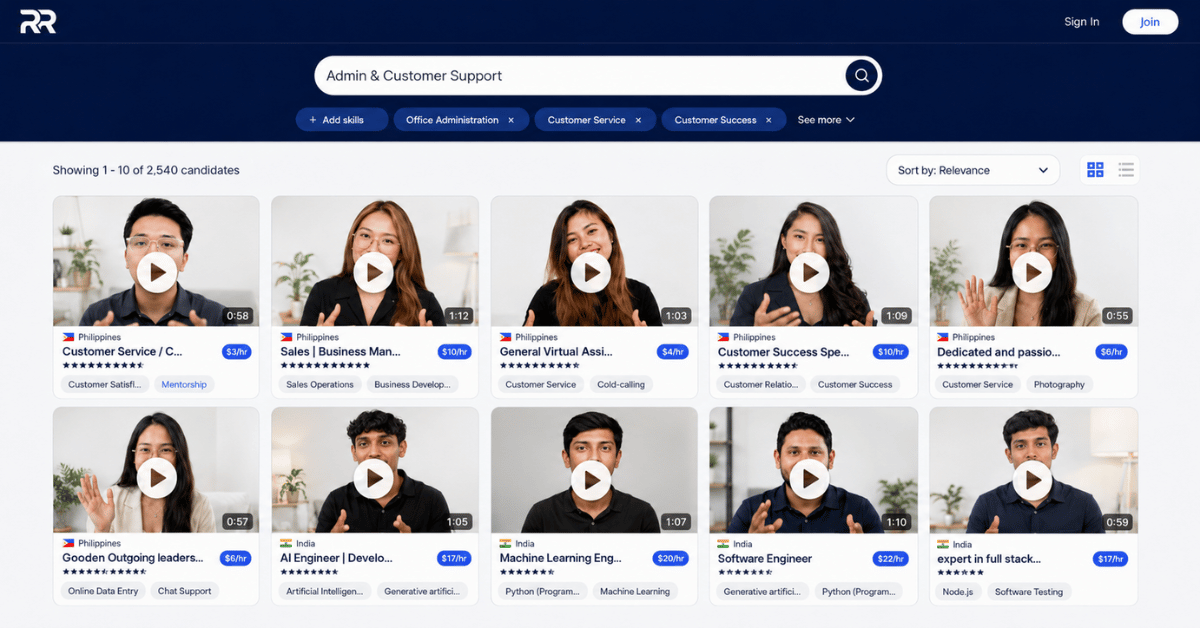
Remote Recruit is built around this video-first approach. Candidate profiles can include video, allowing employers to move beyond reading lists of qualifications and begin seeing the actual people behind those profiles.
Video does not eliminate the need for interviews, nor should it make the hiring decision for the employer. It provides an additional screening signal earlier in the process, helping employers determine which candidates may deserve a closer look before committing time to the next stage.
Why India and the Philippines?
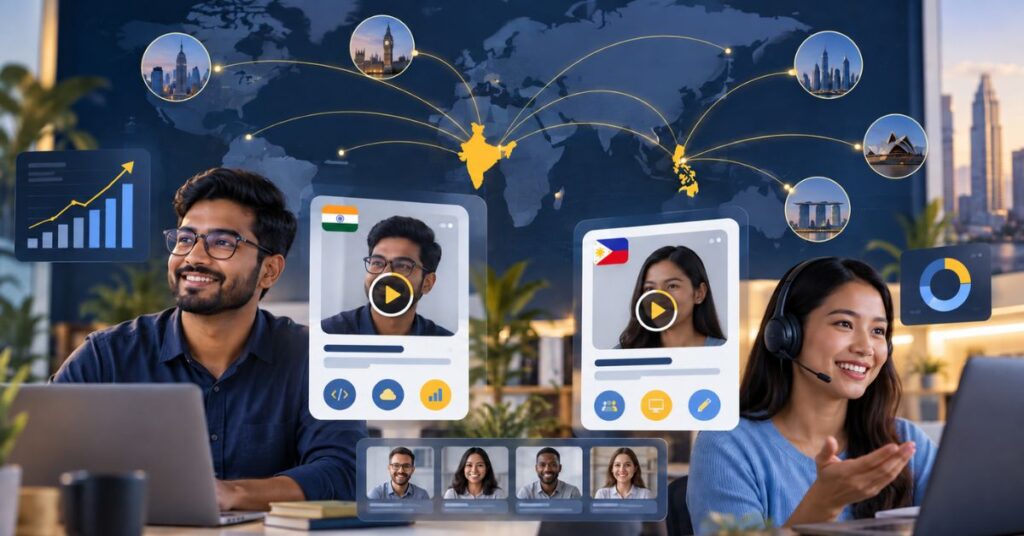
India and the Philippines represent significant talent markets for businesses looking beyond their domestic workforce. Employers searching globally can find many candidates in these markets interested in opportunities with international companies, opening a much broader pool of potential talent.
But a large candidate market introduces another challenge: employers still need to determine who is serious, who has the skills they need, who can communicate effectively, and who deserves their attention. Simply having access to more candidates does not automatically make recruitment easier if every applicant still has to be evaluated through similar resumes and written profiles.
This is where the way candidates are presented becomes important. Traditional resumes can tell employers about previous roles, education, and skills, but when large numbers of candidates are competing for global opportunities, employers need effective ways to navigate that talent pool.
Video adds another perspective. Instead of seeing only what candidates have written about themselves, employers can begin seeing and hearing the actual people they may eventually hire.
Recruiting in India with Remote Recruit
India gives global employers access to a substantial talent market. For companies looking to expand their recruitment beyond their home country, that creates an opportunity to consider candidates who may never have appeared in a traditional local hiring search.
Using Remote Recruit, employers can go beyond simply reviewing lists of names and resumes. Candidate profiles can include video introductions, allowing employers to see people present themselves and communicate before deciding whether to move them further through the hiring process.
That distinction can be particularly valuable when employers are reviewing many candidates. Rather than waiting until a formal interview to hear someone speak, they can gain another perspective earlier and use that information alongside the candidate’s experience and profile.
The objective is not simply to give employers access to more applicants. It is to give them a more useful way to begin understanding the people within that applicant pool.
Recruiting in the Philippines with Remote Recruit
The same principle applies when recruiting in the Philippines. Employers can find candidates interested in international and remote opportunities, but discovering people is only the beginning of the process.
The more important question is which candidates should move forward. When an employer is working through a significant talent pool, relying entirely on written information can make it difficult to understand the differences between candidates until interviews begin.
Video can make those profiles more useful from the start. Employers can watch candidates introduce themselves, hear how they communicate, and combine that information with the experience and other details available within their profiles.
That provides employers with another way to decide where to focus their attention. Rather than treating every application as another resume to read, they can begin evaluating the actual people behind those applications earlier in the process.
A Different Kind of Job Site for Global Recruitment
International recruitment does not necessarily need to follow exactly the same process as traditional domestic hiring. The candidates are distributed around the world, communication can play an important role, and employers may be evaluating people they will never meet in person before they begin working together.
When employers also have access to large international talent pools, screening becomes increasingly important. More candidates create more opportunity, but they also create more information for recruiters and business owners to work through.
Remote Recruit approaches that challenge by combining global candidate profiles with video and technology designed around international recruitment. Video provides employers with another candidate signal, while the platform helps create a hiring experience better suited to businesses looking beyond their local workforce.
The technology supports the process, but the employer still decides who is ultimately right for the job. That distinction matters because successful global hiring is not simply about collecting more applications. It is about understanding which people deserve the next conversation.
For businesses looking toward talent markets such as India and the Philippines, that creates a different way to recruit globally: instead of simply seeing more resumes, employers can begin seeing the people behind them.