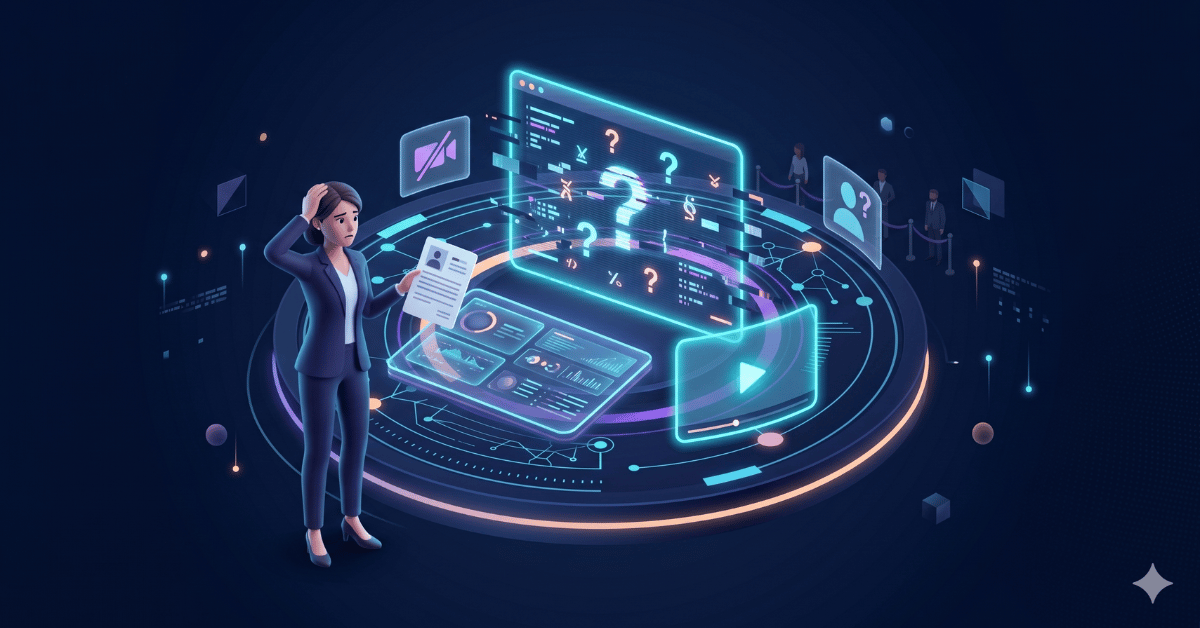
Remote Hiring Challenges make it difficult for employers to identify real talent, but AI, video-based hiring, and structured screening are transforming how companies evaluate candidates globally.
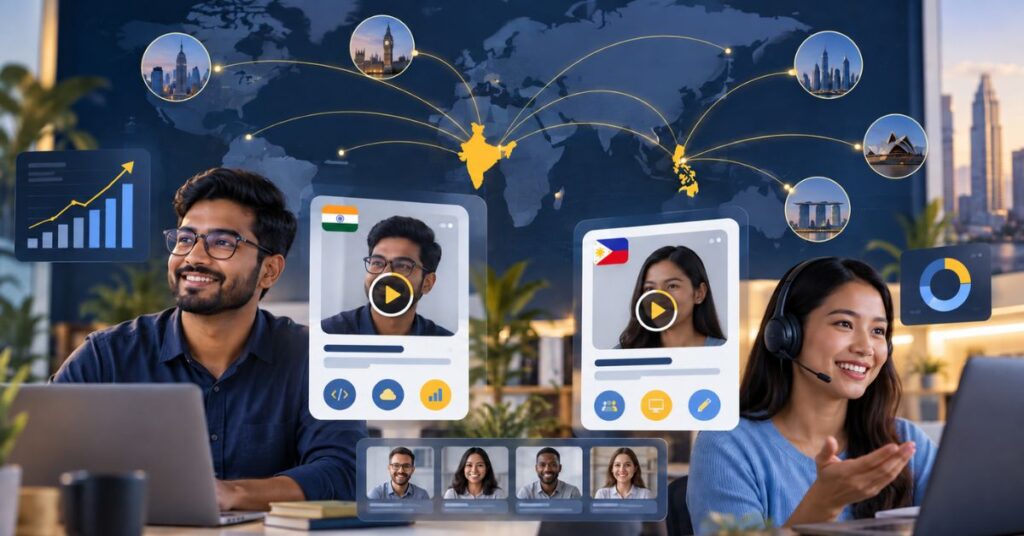
Remote hiring has created unprecedented opportunities for businesses to access talent from around the world. Companies are no longer limited to recruiting within their city or country and can now build distributed teams across multiple regions. However, this transformation has also introduced serious remote hiring challenges that many organizations are still struggling to solve. Employers often need to evaluate candidates they may never meet in person, making it harder to assess communication, professionalism, authenticity, and cultural fit. Research shows that remote job postings receive significantly more applications than traditional office-based roles, increasing the complexity of identifying qualified candidates efficiently. Traditional recruitment systems were not designed for remote recruitment or global remote recruitment at scale. Resumes alone rarely provide enough insight into real capability, while inconsistent screening processes increase the risk of poor hiring decisions. As competition for remote talent grows, employers need more effective ways to evaluate candidates accurately and efficiently. AI candidate screening, video-based hiring, and structured evaluation frameworks are emerging as essential tools for solving these challenges and improving hiring outcomes.
1. Traditional Resumes Do Not Show Real Capability
One of the biggest remote hiring challenges is relying too heavily on resumes to evaluate candidates.
Resumes are static documents that focus primarily on qualifications and past experience. They rarely provide insight into communication ability, adaptability, or how a candidate performs in real-world situations. Employers hiring remotely need more than a list of skills because remote work requires strong collaboration and self-management. Candidates can also exaggerate achievements or optimize resumes using AI tools, making it difficult to verify authenticity. As a result, businesses that depend only on resumes often struggle to identify real talent effectively.
2. Employers Cannot Easily Assess Communication Skills
Communication is one of the most important qualities in remote work environments, yet it is often evaluated too late in the hiring process.
Remote teams depend heavily on written and verbal communication across time zones and cultures. Poor communication can reduce productivity, create misunderstandings, and impact collaboration. Traditional hiring systems often prioritize technical screening before evaluating communication ability. This leads to situations where candidates progress through multiple stages only to fail later due to communication challenges. Employers need structured methods such as video-based hiring to evaluate communication skills early and consistently.
3. High Application Volumes Make Screening Difficult
Remote job opportunities attract candidates globally, leading to extremely high application volumes.
While access to global talent is beneficial, reviewing hundreds or thousands of applications manually becomes overwhelming. Recruiters may miss strong candidates simply because they cannot evaluate every application thoroughly. High application volumes also slow down hiring timelines and reduce efficiency. Employers often struggle to balance speed with quality in global remote recruitment. AI candidate screening helps solve this problem by filtering applications intelligently and prioritizing the most relevant candidates.
4. Candidate Authenticity Is Harder to Verify Remotely
Another major remote hiring challenge is confirming whether candidates are truly who they claim to be.
Employers face increasing concerns around inaccurate resumes, proxy interviews, and AI-assisted application manipulation. Without face-to-face interaction, verifying skills and experience becomes more complicated. Some candidates may perform well during written assessments but struggle during real communication scenarios. This creates risk for employers investing time and resources into recruitment. Video-based hiring and structured screening provide additional layers of verification that improve confidence in hiring decisions.
5. Inconsistent Hiring Processes Reduce Decision Accuracy
Many organizations still use hiring processes designed for office-based recruitment rather than distributed teams.
Different recruiters may evaluate candidates using inconsistent criteria, leading to variability in hiring decisions. Without standardized workflows, employers cannot compare candidates fairly or objectively. Inconsistency increases the likelihood of bias and poor selection outcomes. Structured hiring systems help ensure that every candidate is assessed using the same evaluation framework. This improves transparency, fairness, and overall hiring accuracy.
6. Employers Struggle to Scale Global Hiring Efficiently
As organizations expand internationally, managing recruitment across regions becomes increasingly complex.
Global remote recruitment requires coordination across multiple time zones, communication styles, and hiring expectations. Traditional hiring methods often create bottlenecks that slow down recruitment. Delays can result in losing strong candidates to faster-moving competitors. Employers need scalable systems that support efficient hiring without compromising quality. AI recruitment software and remote hiring platforms help streamline workflows and improve scalability across distributed teams.
How Remote Recruit Solves Remote Hiring Challenges
Remote Recruit is built specifically to help employers overcome modern remote hiring challenges through a structured and technology-driven approach. The platform combines AI candidate screening with video-based hiring to improve hiring accuracy and reduce recruitment risk. Employers can filter candidates based on skills, experience, and relevance while also evaluating communication ability and professionalism through video responses.
Remote Recruit helps companies manage high application volumes more efficiently by automating screening workflows and prioritizing qualified candidates. Structured evaluation frameworks ensure that all candidates are assessed consistently and fairly. This improves transparency and reduces bias in hiring decisions.
For job seekers, Remote Recruit provides a better way to stand out in competitive global remote recruitment environments. Video profiles allow candidates to showcase communication skills, confidence, and personality beyond resumes. This creates stronger opportunities for professionals who may otherwise be overlooked through traditional hiring methods. By combining AI, video, and structured workflows, Remote Recruit helps employers and candidates connect more effectively in the evolving remote work economy.
Conclusion
Remote hiring has transformed recruitment by giving companies access to global talent, but it has also introduced new complexities that traditional hiring systems struggle to handle. Employers face challenges related to communication assessment, candidate verification, screening scalability, and hiring consistency. These remote hiring challenges make it harder to identify real talent and increase the risk of poor hiring outcomes.
To succeed in global remote recruitment, businesses must move beyond outdated recruitment methods and adopt more modern evaluation frameworks. AI candidate screening and video-based hiring provide employers with the tools needed to improve hiring speed, accuracy, and confidence. Structured workflows ensure consistency while reducing bias and inefficiency.
Platforms like Remote Recruit demonstrate how technology can transform hiring processes for both employers and job seekers. Organizations that invest in modern remote recruitment strategies will be better positioned to attract high-quality talent, reduce hiring risks, and build stronger distributed teams. As remote work continues to evolve, the ability to identify real talent effectively will become one of the most important competitive advantages in recruitment.
Frequently Asked Questions
What are the biggest remote hiring challenges?
The biggest remote hiring challenges include evaluating communication skills, verifying authenticity, managing high application volumes, and maintaining consistent screening processes.
Why are resumes not enough in remote hiring?
Resumes do not effectively show communication ability, adaptability, or real-world problem-solving skills needed for remote work.
How does AI candidate screening help employers?
AI candidate screening helps filter large application volumes, identify qualified candidates faster, and improve consistency in evaluation.
Why is video-based hiring important in remote recruitment?
Video-based hiring allows employers to evaluate communication skills, professionalism, and authenticity more effectively than written applications alone.
How does Remote Recruit improve remote hiring?
Remote Recruit combines AI candidate screening, video-based hiring, and structured evaluation systems to help employers identify real talent faster and more accurately.
Sign up on Remote Recruit today and improve your hiring process with AI-powered screening and video-based recruitment designed for modern remote teams.