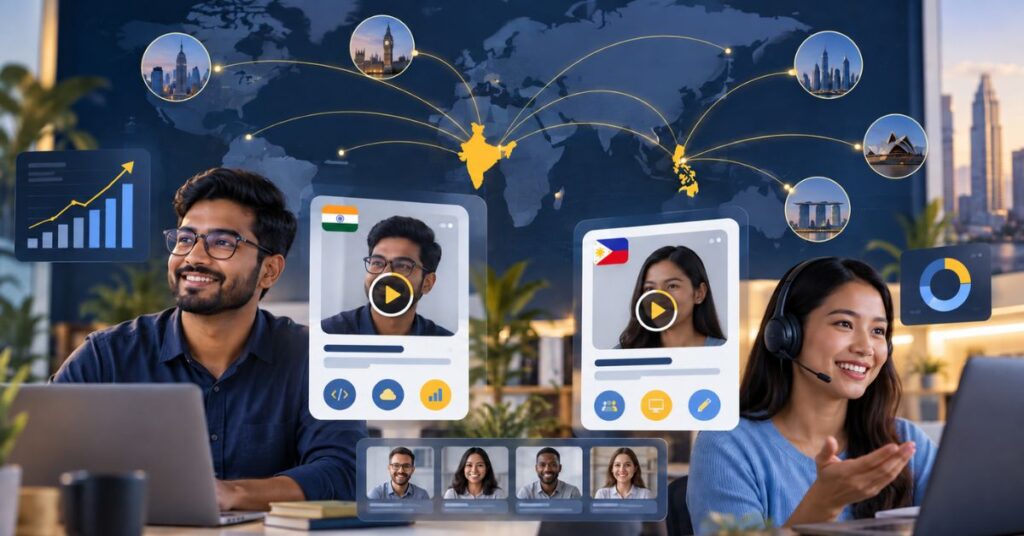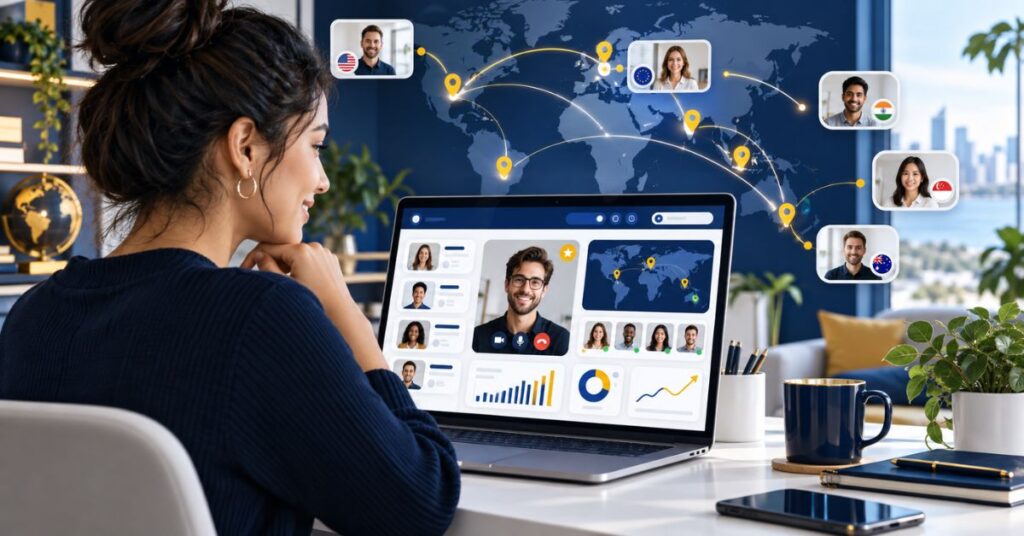
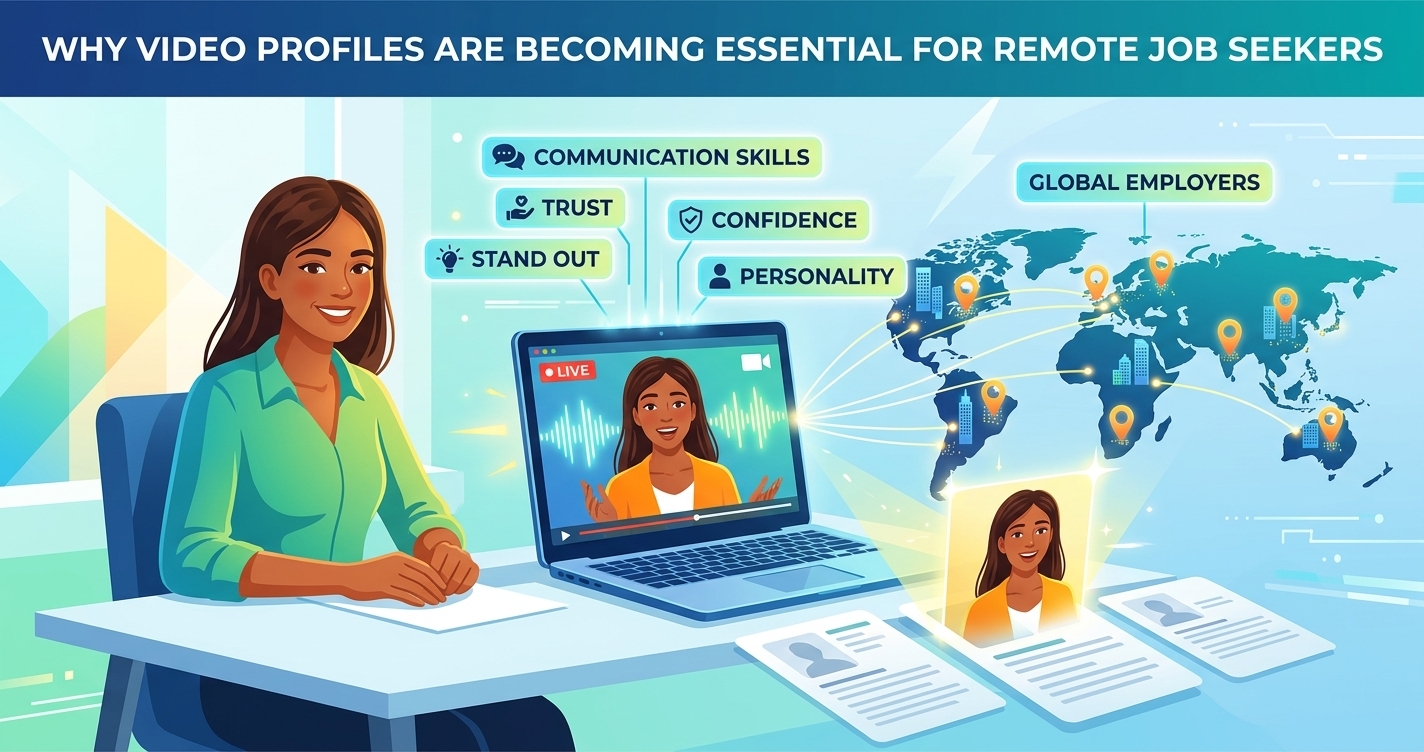
Video Profiles help remote job seekers stand out by showing communication skills, confidence, professionalism, and personality beyond a traditional resume.
Remote work has opened the door to global career opportunities, but it has also made job search more competitive than ever. A single remote role can attract applicants from different countries, industries, and experience levels. This creates a major challenge for job seekers who want to stand out in a crowded digital hiring process. Traditional resumes still matter, but they often fail to show communication skills, confidence, motivation, personality, and remote work readiness. Employers hiring remotely need to understand more than what a candidate has done. They need to know how that candidate communicates, presents ideas, adapts to digital work, and builds trust without meeting in person. This is why Video Profiles are becoming essential for remote job seekers. A strong video profile helps candidates create a more human first impression and demonstrate qualities that are difficult to capture in text. For job seekers competing in global remote recruitment, video can make an application more memorable, more credible, and more personal. It gives employers a clearer picture of the person behind the resume.
1. Video Profiles Help Job Seekers Stand Out Beyond the Resume
A resume can explain your skills and experience, but it cannot fully show who you are as a professional. In remote recruitment, employers often review many applications quickly, which means candidates need stronger ways to create a memorable first impression.
Video Profiles allow job seekers to introduce themselves in a more personal and direct way. Instead of relying only on bullet points and job titles, candidates can explain their strengths, experience, and goals in their own voice. This helps employers better understand communication style, confidence, and motivation. A clear and professional video profile can make a candidate feel more real and trustworthy. For remote job seekers, this can be the difference between being another application and being someone an employer remembers.
2. Video Profiles Show Communication Skills Early
Communication is one of the most important qualities employers look for in remote workers. Since remote teams depend on digital communication, hiring managers want to know whether candidates can explain ideas clearly and professionally.
Video Profiles give job seekers a chance to demonstrate communication ability before the first interview. Candidates can show how they speak, organize thoughts, and present their background in a structured way. This is especially important for roles that involve client communication, team collaboration, sales, customer support, project management, or leadership. A strong video profile helps employers feel more confident that the candidate can communicate effectively in a remote team. It also gives candidates a practical way to prove a skill that resumes often only claim.
3. Video Profiles Build Trust With Global Employers
Trust is a major factor in global remote recruitment because employers may be evaluating candidates from countries and markets they are not familiar with. When hiring remotely, employers often have limited visibility into a candidate’s personality, professionalism, and authenticity.
Video Profiles help reduce this uncertainty by creating a more transparent first impression. When candidates appear on video, employers can better understand how they present themselves and how serious they are about the opportunity. This does not replace interviews or skills checks, but it helps create early confidence. A thoughtful video profile shows effort, preparation, and professionalism. For global employers, these signals matter because trust is one of the foundations of successful remote hiring.
4. Video Profiles Help Candidates Show Personality and Motivation
Traditional resumes are often formal and limited. They may list responsibilities and achievements, but they rarely show energy, enthusiasm, or genuine interest in remote work.
Video Profiles allow candidates to communicate motivation in a more natural way. Job seekers can explain why they are interested in remote opportunities, what kind of work they enjoy, and how they approach professional challenges. This gives employers a better sense of whether the candidate may fit the team culture and role expectations. Personality matters in remote teams because collaboration often happens through screens, messages, and virtual meetings. A strong video profile helps candidates show both competence and character.
5. Video Profiles Support Skills-Based Hiring
Employers are increasingly moving away from resume-only hiring because traditional credentials do not always reflect real ability. In global remote recruitment, strong candidates may come from different educational systems, local markets, and career paths.
Video Profiles help support skills-based hiring by giving candidates a chance to explain their practical experience and strengths. Instead of being judged only by job titles or company names, candidates can describe projects, achievements, tools, and problem-solving examples. This helps employers evaluate potential more fairly and accurately. It also benefits job seekers who may have strong ability but less recognizable local experience. Video creates a more balanced way to show value in a global hiring market.
6. Video Profiles Improve Remote Work Readiness Signals
Remote employers want candidates who can work independently, manage time, communicate proactively, and stay accountable without constant supervision. These qualities can be difficult to judge from a resume alone.
Video Profiles allow job seekers to highlight their remote work habits and professional discipline. Candidates can explain how they manage deadlines, communicate with teams, use collaboration tools, and stay productive in flexible work environments. This helps employers understand whether the candidate is prepared for the realities of remote work. A good video profile should not only explain what someone has done, but also how they work. This gives employers stronger signals of remote readiness before the interview stage.
7. Video Profiles Help Job Seekers Compete in Larger Talent Pools
Remote job seekers are often competing with applicants from many different countries and backgrounds. This means employers may receive far more applications than they would for a local office role.
Video Profiles help candidates create a stronger point of differentiation in crowded talent pools. While many applicants may have similar resumes, not everyone takes the time to record a clear and professional video introduction. This extra effort can signal seriousness, confidence, and preparation. It also helps hiring managers quickly connect a face and voice to the application. In global remote recruitment, visibility matters, and video can help candidates rise above the volume.
8. Video Profiles Make Applications More Human
Digital hiring can sometimes feel impersonal for both employers and job seekers. Applications are often reduced to forms, keywords, documents, and automated screening steps.
Video Profiles bring a human element back into the process. They allow candidates to communicate directly with employers, even before a live interview takes place. This can make the hiring experience feel more personal and engaging. For job seekers, video creates an opportunity to be seen as a professional person rather than only a document. For employers, it adds context that helps them make more informed decisions during early screening.
9. Video Profiles Can Improve Interview Opportunities
A strong video profile can increase the chances of moving to the next stage because it gives employers more reasons to engage with the candidate. When hiring teams can already see communication skills and motivation, they may feel more confident scheduling an interview.
This is especially helpful when employers are deciding between candidates with similar experience. A professional video profile can show preparation, confidence, and clarity that may not be visible in a resume. It can also answer basic questions before the interview, making the live conversation more productive. Candidates who use video well can create stronger first impressions and reduce uncertainty for employers. In remote recruitment, anything that builds confidence early can improve interview opportunities.
10. Video Profiles Prepare Candidates for Modern Hiring Processes
Recruitment is becoming more digital, structured, and technology-driven. Employers are using AI candidate screening, video-based hiring, online assessments, and remote interviews to evaluate talent more efficiently.
Video Profiles help job seekers adapt to this new hiring environment. Candidates who are comfortable presenting themselves on video are often better prepared for remote interviews and digital collaboration. This skill is increasingly important because remote work often requires confidence in virtual communication. A video profile is not just a hiring asset, but also a sign that the candidate understands modern work expectations. Job seekers who embrace video early may be better positioned for future remote career opportunities.
11. Practical Tips for Creating Strong Video Profiles
Creating Video Profiles does not require expensive equipment or advanced production skills. What matters most is clarity, professionalism, relevance, and authenticity.
1. Keep your message focused and professional
A strong video profile should clearly explain who you are, what you do, and what type of remote role you are looking for. Avoid speaking too generally or trying to cover your entire career history. Focus on your strongest skills, most relevant experience, and why you are a good fit for remote work. Employers should be able to understand your value within the first few moments. A focused message shows preparation and respect for the employer’s time.
2. Use clear lighting and a quiet background
Video quality affects first impressions, even if the employer is not expecting a professional studio recording. Choose a quiet place with good lighting and minimal distractions so the viewer can focus on your message. Make sure your face is visible, your audio is clear, and your background looks neat. These small details show professionalism and attention to detail. In remote work, how you present yourself digitally can influence how employers judge your readiness for virtual collaboration.
3. Speak naturally and confidently
A video profile should feel professional but not robotic. Speak clearly, maintain a steady pace, and use simple language to explain your experience. Avoid reading word for word from a script because it can make the video feel less authentic. Practicing beforehand can help you sound more confident while still appearing natural. Employers want to see communication ability, so focus on being clear, calm, and genuine.
4. Highlight remote work skills
Use your video profile to explain why you are prepared for remote work. Mention skills such as time management, digital collaboration, self-motivation, written communication, and experience working across time zones if relevant. These details help employers understand how you may perform in a distributed team. Remote work requires more than technical ability, so showing work habits can strengthen your profile. A candidate who understands remote expectations is more likely to build employer confidence.
5. End with a clear and positive statement
The end of your video profile should leave employers with a strong final impression. You can briefly restate your value, express interest in remote opportunities, and invite employers to review your profile or contact you. A confident closing makes your video feel complete and professional. It also shows that you are serious about connecting with global employers. A clear ending helps employers remember you after reviewing multiple candidates.
How Remote Recruit Supports Employers and Job Seekers
Remote Recruit helps job seekers use Video Profiles to stand out in global remote recruitment and present themselves beyond traditional resumes. For candidates, the platform creates a professional space to showcase communication skills, personality, confidence, and remote work readiness. This helps job seekers build trust with global employers and compete more effectively for remote job opportunities.
For employers, Remote Recruit provides a modern way to evaluate candidates using video-based hiring, AI candidate screening, and structured remote recruitment workflows. Hiring teams can assess communication earlier, identify stronger candidates faster, and reduce the limitations of resume-only screening. This is especially valuable when hiring across countries, time zones, and large applicant pools.
Remote Recruit is designed to support both sides of the hiring journey. Job seekers gain a better way to show their potential, while employers gain better tools to evaluate authenticity, professionalism, and fit. By combining Video Profiles with AI-powered screening and global remote recruitment technology, Remote Recruit helps create a more transparent, efficient, and human hiring experience.
Conclusion
Video Profiles are becoming essential for remote job seekers because the hiring process has changed. Employers are no longer evaluating candidates only through resumes, local interviews, or traditional applications. They are hiring across borders, reviewing larger talent pools, and looking for stronger signals of communication, trust, and remote readiness. In this environment, job seekers need better ways to show who they are and why they are the right fit.
A strong video profile gives candidates an opportunity to make a memorable first impression. It helps show communication skills, motivation, professionalism, and personality in a way that text alone cannot achieve. It also gives employers more confidence when evaluating candidates they may never meet in person. For remote job seekers, video is not just a nice addition. It is becoming a practical tool for competing in global hiring markets.
Remote Recruit helps candidates take advantage of this shift by making Video Profiles part of a modern remote recruitment experience. As global remote hiring continues to grow, job seekers who learn to present themselves effectively on video will be better positioned to access stronger opportunities and build long-term remote careers.
Frequently Asked Questions
What are Video Profiles?
Video Profiles are short video introductions that allow job seekers to present their experience, skills, communication style, and motivation to employers.
Why are Video Profiles important for remote job seekers?
Video Profiles help remote job seekers stand out by showing communication ability, confidence, professionalism, and personality beyond a traditional resume.
Do Video Profiles replace resumes?
No. Video Profiles support resumes by adding a more personal and human layer to the application. Employers still need written details, but video helps them understand candidates better.
What should job seekers include in Video Profiles?
Job seekers should include a brief introduction, relevant experience, key skills, remote work readiness, and a clear explanation of the type of roles they are seeking.
How long should a video profile be?
A video profile should usually be short, focused, and easy to watch. The goal is to create a strong first impression without overwhelming the employer.
How does Remote Recruit use Video Profiles?
Remote Recruit allows job seekers to showcase themselves through Video Profiles while helping employers evaluate communication, professionalism, and fit more effectively.
Sign up on Remote Recruit today to create your Video Profile, showcase your skills, and connect with global remote job opportunities.