Video-based Recruitment helps employers avoid costly hiring mistakes by revealing real communication, intent, and authenticity early in the hiring process. Remote Recruit enables smarter, faster, and more human hiring decisions at scale.
Hiring has become more complex as remote and global work models continue to grow. Employers are now evaluating candidates they may never meet in person, often relying heavily on resumes, written applications, and short interviews. At the same time, AI tools have made it easier for candidates to polish resumes and applications, which has increased the risk of hiring decisions being based on incomplete or misleading information. According to multiple workforce studies, bad hires can cost organizations up to 30 percent of a role’s annual salary when productivity loss, rehiring, and onboarding are considered.
Video-based Recruitment helps address these challenges by giving employers earlier and deeper insight into candidates as real people. Instead of guessing communication ability, motivation, or cultural fit, hiring teams can see and hear candidates directly. This shift allows employers to avoid common hiring mistakes that slow growth, increase turnover, and damage team performance. Video-based Recruitment is no longer a nice-to-have feature but a practical solution for hiring accurately and efficiently in a remote-first world.
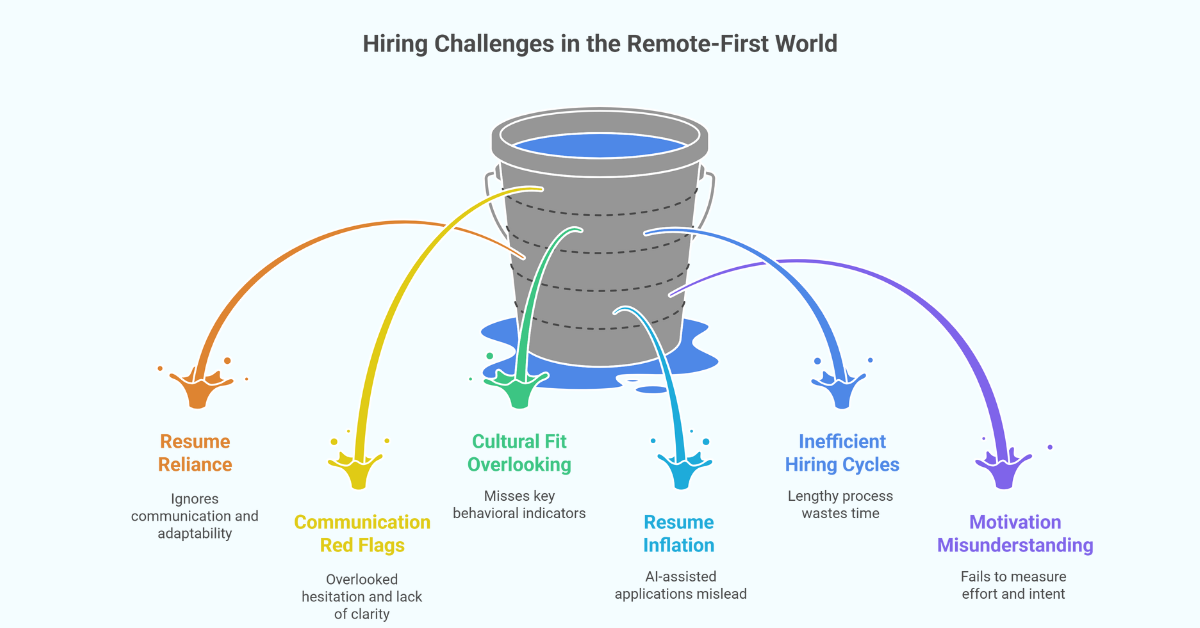
1. Hiring Based Only on Resumes and Written Applications
One of the most common hiring mistakes is relying too heavily on resumes and written responses to evaluate candidates. While resumes summarize experience, they rarely show how a person communicates, thinks, or adapts in real situations.
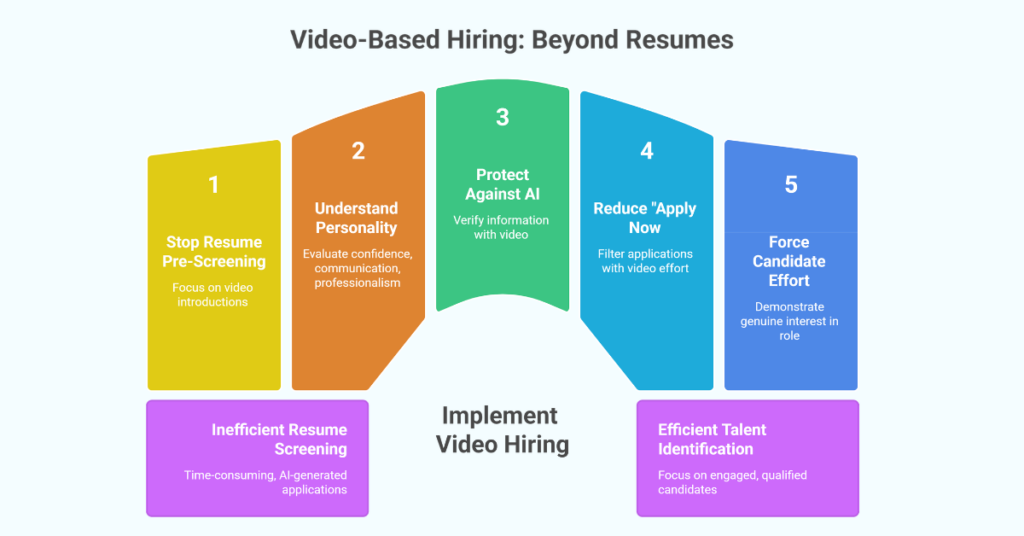
Resumes can be exaggerated, professionally edited, or generated using AI tools, making it difficult to distinguish real capability from presentation. Video-based Recruitment allows employers to assess communication skills, confidence, and clarity early in the process. By hearing candidates explain their experience in their own words, hiring teams gain context that resumes alone cannot provide. This helps avoid advancing candidates who look strong on paper but struggle to communicate effectively in real work environments, especially in remote roles where communication is critical.
2. Missing Red Flags in Communication and Confidence
Poor communication is one of the top reasons remote hires fail, yet it is often overlooked during resume screening. Written applications rarely reveal hesitation, lack of clarity, or discomfort with professional conversation.
Video-based Recruitment exposes these red flags early. Employers can observe how candidates structure responses, handle unscripted questions, and express ideas clearly. This is particularly important for roles that involve collaboration, customer interaction, or cross-functional teamwork. Identifying communication gaps early prevents costly interview cycles and reduces the risk of hiring someone who struggles to operate effectively in a remote setting. Video-based Recruitment ensures communication ability is evaluated before significant time and resources are invested.
3. Overlooking Cultural Fit in Remote and Global Teams
Cultural fit becomes harder to evaluate when hiring remotely, yet it remains one of the strongest predictors of long-term success. Many employers rely on assumptions based on resumes or short calls, which often miss key behavioral indicators.
Video-based Recruitment provides insight into how candidates present themselves, respond to situational prompts, and align with company values. Employers can assess adaptability, professionalism, and attitude in a more natural format. This is especially valuable when hiring across countries and cultures, where misunderstandings can lead to friction and turnover. By seeing candidates communicate in real time, employers can better determine whether someone will integrate smoothly into a distributed team environment.
4. Falling for Resume Inflation and AI-Assisted Applications
AI tools have made resume inflation more common than ever. Candidates can generate polished resumes and answers that may not reflect their actual experience or skill level.
Video-based Recruitment helps employers verify claims by comparing what candidates say in writing with how they explain their experience verbally. Inconsistencies become easier to spot when candidates are asked to discuss past work, challenges, or achievements on video. This approach reduces the risk of hiring individuals who rely heavily on AI-generated content without real expertise. Video-based Recruitment acts as a reality check that balances technology with human judgment.
5. Wasting Time on Long and Inefficient Hiring Cycles
Lengthy hiring processes often result from unclear early screening. Employers spend weeks interviewing candidates who ultimately turn out to be poor fits.
Video-based Recruitment streamlines early-stage screening by allowing hiring teams to review candidate videos asynchronously. This reduces the need for multiple preliminary interviews and helps teams align faster on who should move forward. According to hiring benchmarks, companies that shorten time-to-hire are more likely to secure top talent before competitors do. Video-based Recruitment enables faster, more confident decision-making without sacrificing quality.
6. Hiring Without Understanding Motivation and Effort
Motivation is difficult to measure through resumes alone, yet it plays a major role in performance and retention. Candidates who apply to many roles using automated tools may show little real interest in any single opportunity.
Video-based Recruitment highlights effort and intent. Preparing and submitting a video requires time, confidence, and commitment. Candidates who invest effort into presenting themselves clearly often demonstrate stronger interest and accountability. Employers benefit by focusing on applicants who are more likely to engage, perform, and stay long term. This reduces early attrition and improves overall hiring outcomes.
How Remote Recruit Supports Video-Based Recruitment
Remote Recruit is designed to help employers and job seekers succeed in a remote-first hiring environment by combining Video-based Recruitment with intelligent screening and verification. For employers, the platform provides access to verified video profiles that highlight communication skills, motivation, and cultural alignment before interviews begin. This reduces hiring risk and allows teams to focus only on candidates who demonstrate real potential.
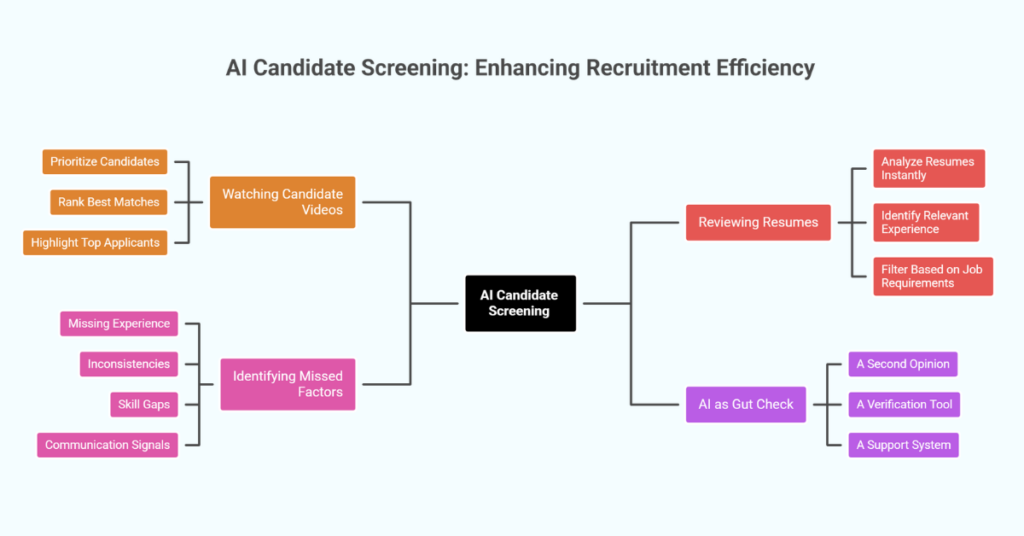
Remote Recruit also integrates AI candidate screening to surface the most relevant talent quickly while maintaining fairness and transparency. Employers can evaluate candidates across regions without relying solely on resumes or assumptions. For job seekers, Remote Recruit offers a structured way to stand out beyond traditional applications. Candidates can present their experience and personality directly through video, which is especially valuable for professionals in offshore or emerging markets.
By verifying employers and candidates, Remote Recruit helps create trust on both sides of the hiring process. The platform ensures legitimate opportunities, clear expectations, and authentic connections, making Video-based Recruitment practical, scalable, and effective for modern hiring needs.
Conclusion
Video-based Recruitment helps employers avoid some of the most common and costly hiring mistakes in remote and global hiring. By moving beyond resumes, organizations gain earlier insight into communication, authenticity, cultural fit, and motivation. This leads to faster decisions, better hires, and stronger long-term performance. As remote work continues to expand, the risks of relying on outdated hiring methods increase. Employers who fail to adapt may experience higher turnover, longer hiring cycles, and reduced productivity.
Video-based Recruitment offers a more human and accurate way to evaluate talent in a digital hiring landscape. It balances the efficiency of technology with the clarity of real human interaction. Platforms like Remote Recruit are enabling this shift by making video-based hiring accessible, secure, and scalable. For employers and job seekers alike, Video-based Recruitment represents a smarter approach to building meaningful and successful working relationships in the future of work.
Frequently Asked Questions
What is Video-based Recruitment?
Video-based Recruitment is a hiring method where candidates submit video responses or profiles as part of the application process, allowing employers to assess communication, authenticity, and fit early.
How does Video-based Recruitment reduce hiring mistakes?
It reveals communication gaps, inflated experience, and lack of motivation earlier than resumes, helping employers make more informed decisions faster.
Is Video-based Recruitment suitable for remote and offshore hiring?
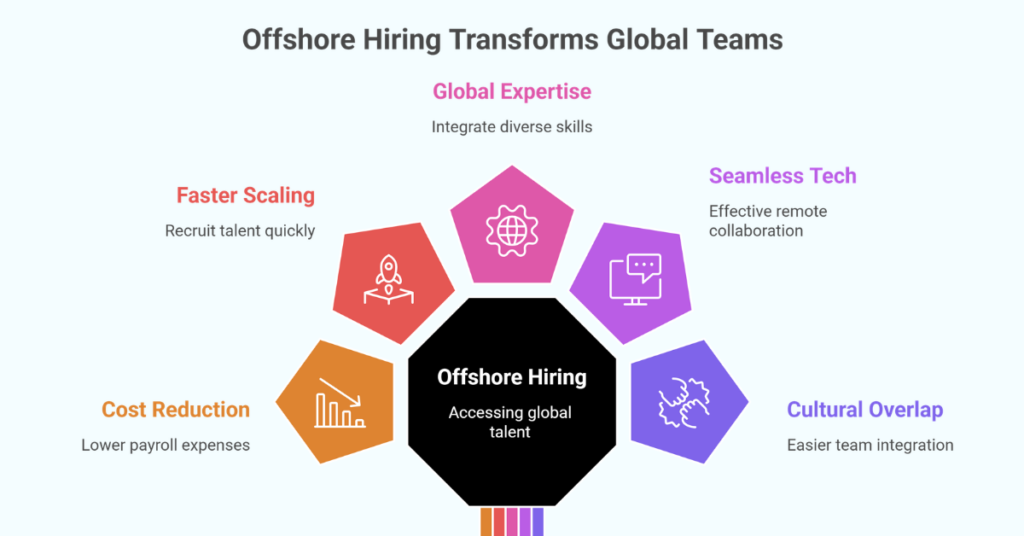
Yes. Video-based Recruitment is especially effective for remote and global roles because it helps employers evaluate candidates across locations without in-person interviews.
Can Video-based Recruitment improve time-to-hire?
Yes. By streamlining early screening and reducing unnecessary interviews, Video-based Recruitment shortens hiring cycles and improves efficiency.
How does Remote Recruit support Video-based Recruitment?
Remote Recruit combines verified video profiles, AI screening, and employer validation to ensure authentic, secure, and effective Video-based Recruitment.