Hire Offshore with AI Candidate Screening to reduce risk, improve hiring accuracy, and build trusted global teams faster. Remote Recruit combines AI screening with human insight to make offshore hiring reliable and scalable.
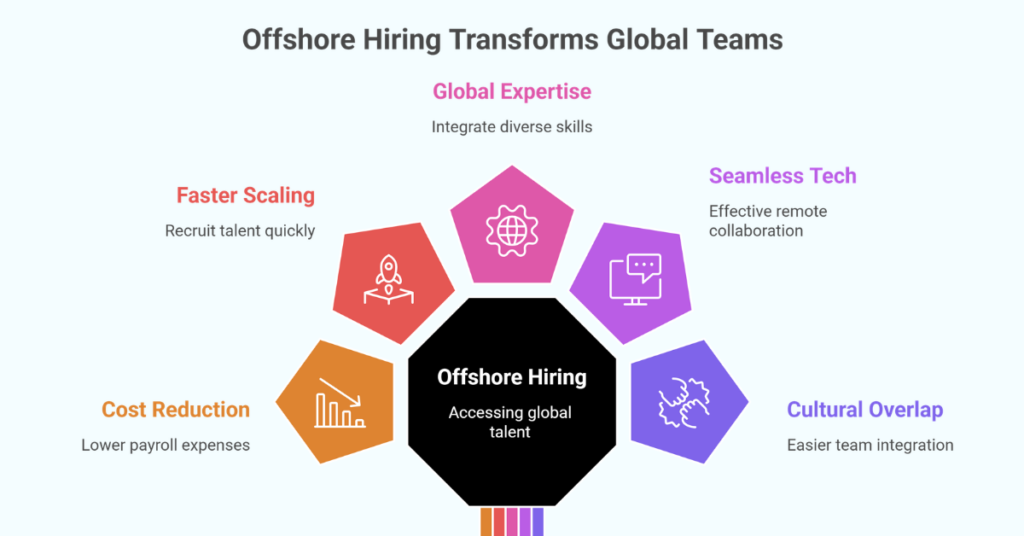
Offshore hiring has become a strategic advantage for companies looking to scale faster, access global talent, and control costs. At the same time, it introduces new risks that traditional hiring methods were never designed to manage. Employers are often hiring candidates they will never meet in person, across different time zones, cultures, and legal environments. Resume fraud, misrepresented experience, communication gaps, and cultural misalignment are some of the most common causes of offshore hiring failure. According to global workforce studies, poor hiring decisions remain one of the leading drivers of early attrition and productivity loss in distributed teams. AI candidate screening plays a critical role in reducing these risks. It allows employers to evaluate candidates consistently, verify information at scale, and focus human attention where it matters most. When companies Hire Offshore with AI Candidate Screening, they gain a structured, data-driven approach that improves confidence, speed, and long-term hiring outcomes in global recruitment.
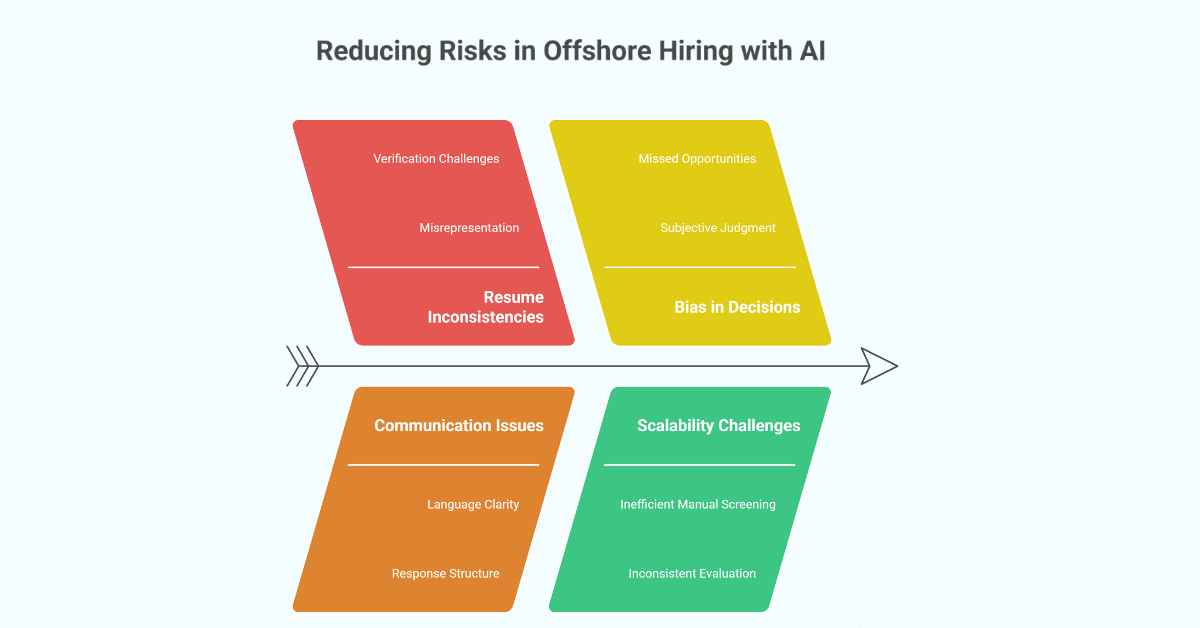
1. AI Screens for Resume Inconsistencies and Misrepresentation
One of the biggest risks in offshore hiring is relying on resumes that exaggerate skills or misrepresent experience. This challenge increases when hiring across borders where verification is harder.
Resume and profile consistency checks
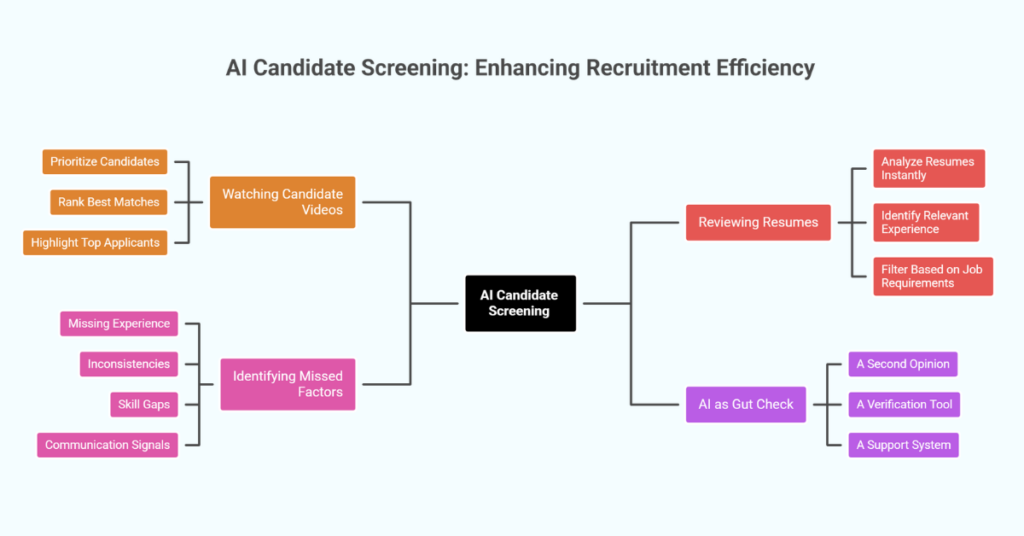
AI candidate screening compares resumes with application responses, online profiles, and screening answers to detect inconsistencies. It highlights gaps, repeated patterns, or unusually polished content that may signal automation or exaggeration. This reduces the likelihood of advancing candidates whose experience does not align with their claims. Employers benefit from a clearer picture before investing time in interviews, lowering the risk of hiring someone who looks qualified on paper but lacks real capability.
2. AI Evaluates Communication Readiness for Remote Work
Communication issues are a leading cause of failure in offshore roles, especially in remote-first environments. Written applications alone rarely reveal how well someone communicates in real scenarios.
Communication pattern analysis
AI candidate screening evaluates language clarity, response structure, and consistency across screening steps. It helps identify candidates who can express ideas clearly, follow instructions, and respond thoughtfully. This is especially valuable for roles involving collaboration, client interaction, or cross-functional teamwork. By filtering early for communication readiness, employers reduce the risk of hiring offshore candidates who struggle to operate effectively in distributed teams.
3. AI Reduces Bias in Offshore Hiring Decisions
Bias can quietly influence offshore hiring, whether related to geography, accent, education background, or perceived cultural differences. These biases often lead to missed opportunities or poor hiring decisions.
Standardized candidate evaluation
AI candidate screening applies consistent criteria across all applicants, regardless of location. Every candidate is assessed using the same benchmarks, reducing subjective judgment in early screening stages. This improves fairness while helping employers focus on skills, experience, and role relevance. Reducing bias also expands access to strong talent pools that might otherwise be overlooked due to assumptions rather than evidence.
4. AI Detects Low Effort and Automated Applications
Offshore hiring often attracts high application volume, including candidates who apply broadly using automated tools without real interest in the role. This increases noise and slows hiring teams.
Effort and engagement signals
AI candidate screening identifies patterns associated with mass applications, generic responses, and minimal engagement. It helps surface candidates who invest effort into their applications and demonstrate genuine interest. Employers can prioritize applicants who are more likely to perform, engage, and stay long term. This reduces early-stage churn and improves overall hiring quality.
5. AI Improves Scalability Without Sacrificing Accuracy
As companies expand offshore teams, manual screening quickly becomes inefficient and inconsistent. Scaling hiring without proper screening increases risk.
High-volume candidate screening at scale
AI enables employers to screen large candidate pools consistently without cutting corners. It processes applications quickly while maintaining the same evaluation standards across roles and regions. This allows hiring teams to grow offshore operations without increasing error rates. Scalability with accuracy ensures that speed does not come at the cost of poor hiring decisions.
6. AI Flags Potential Risk Indicators Early
Some offshore hiring risks only become visible after onboarding, when it is already costly to correct. AI helps surface warning signs earlier in the process.
Early risk detection signals
AI candidate screening identifies patterns linked to unreliable behavior, inconsistent responses, or unexplained experience gaps. These signals prompt recruiters to dig deeper before moving forward. Early detection allows employers to ask better questions and validate concerns during interviews. This proactive approach significantly reduces the chance of post-hire surprises that disrupt teams and timelines.
7. AI Enables Faster, More Confident Hiring Decisions
Delays in offshore hiring often result from uncertainty. Hiring teams hesitate when they lack reliable information or clarity on candidate quality.
Decision support through data-driven insights
AI candidate screening provides summarized insights that help hiring managers compare candidates objectively. Instead of relying on intuition alone, teams can make decisions based on verified data and consistent scoring. Faster decisions reduce time-to-hire and prevent losing strong candidates to competitors. Confidence in hiring decisions directly lowers risk and improves long-term success in offshore recruitment.
How Remote Recruit Helps You Hire Offshore with AI Candidate Screening
Remote Recruit is built to help employers reduce risk when hiring offshore by combining AI candidate screening with video-based evaluation and human oversight. For employers, the platform verifies candidate profiles, screens applications for authenticity, and highlights communication readiness before interviews begin. This ensures hiring teams spend time only on candidates who demonstrate real potential.
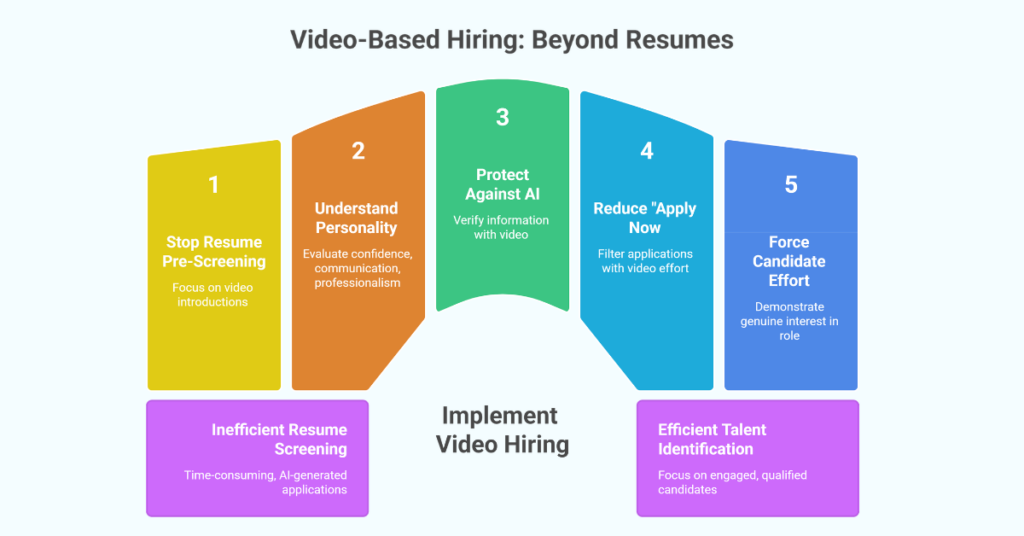
Remote Recruit also integrates video introductions into the screening process, allowing employers to validate AI insights with real human interaction. This balance prevents over-reliance on automation while maintaining efficiency and consistency. Employers gain transparency, speed, and confidence across global hiring workflows.
For job seekers, Remote Recruit creates a fair and structured way to compete for offshore roles. Candidates are evaluated on skills, communication, and effort rather than location or assumptions. Video profiles allow professionals to present their experience authentically, while AI screening ensures equal treatment across applicants. By verifying employers and candidates, Remote Recruit builds trust on both sides, making offshore hiring safer, faster, and more effective.
Conclusion
Hiring offshore offers powerful advantages, but it also introduces risks that traditional hiring processes struggle to manage. Resume fraud, communication gaps, bias, and slow decision-making can quickly derail global hiring efforts. When companies Hire Offshore with AI Candidate Screening, they replace guesswork with structure and clarity. AI provides consistent evaluation, early risk detection, and scalable screening without sacrificing accuracy or fairness.
As global hiring continues to grow, employers who rely solely on manual screening will face higher costs, slower hiring cycles, and increased turnover. AI candidate screening enables organizations to move faster while making better decisions. When paired with human judgment and video-based validation, it becomes a powerful tool for building reliable offshore teams. Platforms like Remote Recruit are helping companies adopt this balanced approach, ensuring offshore hiring is not only efficient but also secure and sustainable for long-term growth.
Frequently Asked Questions
What does it mean to hire offshore with AI candidate screening?
It means using AI tools to evaluate offshore candidates for skills, communication, authenticity, and risk indicators before interviews or hiring decisions.
How does AI candidate screening reduce offshore hiring risk?
AI detects inconsistencies, low-effort applications, communication gaps, and bias early, helping employers avoid costly hiring mistakes.
Is AI candidate screening suitable for all offshore roles?
Yes. AI screening is especially valuable for remote, offshore, and high-volume roles where consistency and speed are critical.
Does AI replace human recruiters in offshore hiring?
No. AI supports recruiters by handling early screening and risk detection, allowing humans to focus on deeper evaluation and relationship building.
How does Remote Recruit support AI candidate screening?
Remote Recruit combines AI screening, verified video profiles, and employer validation to ensure safe, fair, and effective offshore hiring.