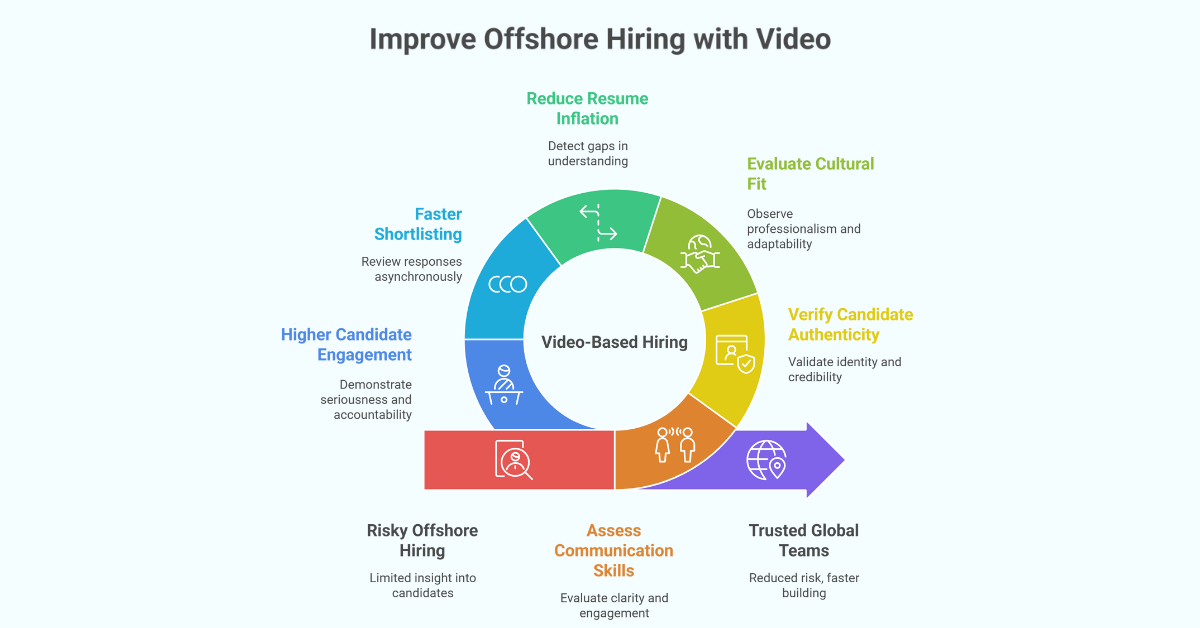
Hire Offshore with Video-Based Hiring to see real talent beyond resumes, reduce hiring risk, and build trusted global teams faster with Remote Recruit.
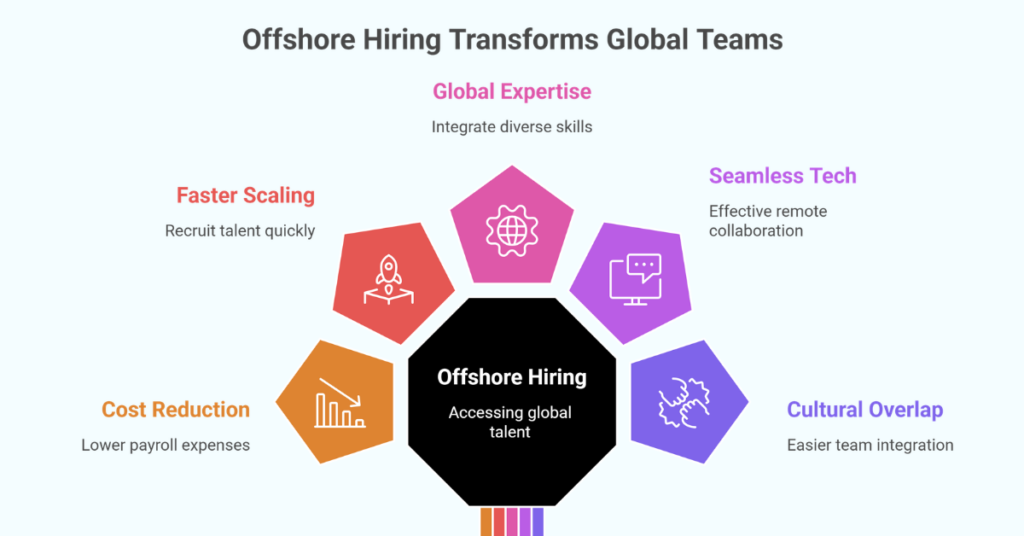
Hiring offshore talent has become a strategic move for companies looking to scale efficiently, access global skills, and remain competitive. However, offshore hiring introduces challenges that traditional recruitment methods were never designed to handle. Employers often evaluate candidates they will never meet in person, across different cultures, languages, and time zones. Resumes and written applications provide limited insight into how candidates actually communicate, think, or collaborate in real working environments. At the same time, AI tools and templated applications have made it easier for candidates to appear qualified on paper without demonstrating real ability. Video-based hiring changes this dynamic. It allows employers to see and hear candidates early, bringing clarity and confidence into offshore recruitment decisions. By using video-based hiring, companies can move faster, reduce misalignment, and focus on candidates who demonstrate real communication skills, motivation, and cultural compatibility. For offshore hiring in particular, video-based hiring is becoming one of the most effective tools to improve hiring outcomes while reducing long-term risk.
1. Clearer Assessment of Communication Skills
Strong communication is essential for offshore roles, especially when teams collaborate remotely across time zones. Video-based hiring allows employers to evaluate communication ability early rather than relying on assumptions from written applications.
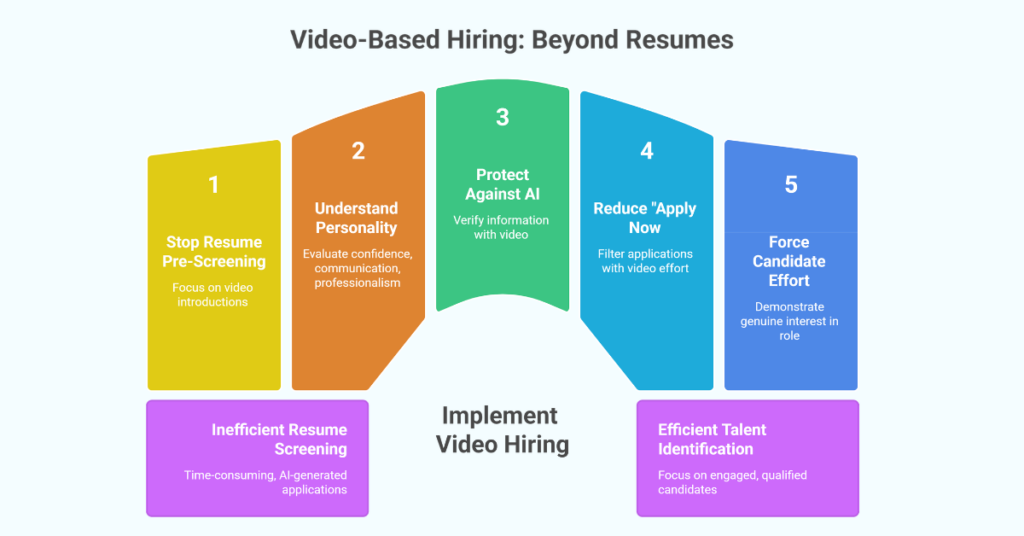
Resumes do not reveal how clearly a candidate can explain ideas, respond to questions, or engage in professional conversations. Video-based hiring enables employers to observe speech clarity, confidence, tone, and structure in real time. This is especially important for roles involving collaboration, reporting, or client interaction. Employers can quickly identify candidates who communicate effectively and feel comfortable operating in a remote environment. By assessing communication upfront, companies reduce the risk of hiring offshore talent who struggle with daily collaboration and expectations.
2. Better Verification of Candidate Authenticity
Authenticity is one of the biggest concerns in offshore hiring. Employers often worry whether the person on the resume is truly the person doing the work.
Video-based hiring helps validate identity and credibility by putting a real face and voice behind every application. Candidates must speak about their experience, skills, and goals in their own words. This makes it easier to identify inconsistencies between written claims and actual understanding. Video responses also reduce the likelihood of proxy interviews or misrepresentation. For employers hiring offshore, this added layer of verification builds trust and significantly lowers the risk of hiring candidates who do not match their profiles.
3. Stronger Evaluation of Cultural Fit
Cultural alignment plays a major role in offshore hiring success, yet it is one of the hardest factors to evaluate through resumes alone. Video-based hiring provides valuable behavioral context.
Through video, employers can observe how candidates present themselves, respond to situational questions, and demonstrate professionalism. These signals help assess adaptability, attitude, and alignment with company values. This is especially important when building distributed teams where trust and collaboration matter more than physical proximity. Video-based hiring allows employers to identify candidates who are more likely to integrate smoothly into remote team dynamics. Strong cultural fit reduces turnover and improves long-term performance in offshore roles.
4. Reduced Risk from Resume Inflation and AI Misuse
Resume inflation and AI-generated applications have become common challenges in global recruitment. Offshore hiring is especially vulnerable due to limited local verification options.
Video-based hiring acts as a practical counterbalance to over-polished resumes. When candidates explain their experience verbally, gaps in understanding become easier to detect. Employers can assess depth of knowledge rather than relying on keywords or formatting. Video also discourages low-effort mass applications, as candidates must invest time and preparation. This reduces noise in the hiring funnel and helps employers focus on genuine talent with real capability.
5. Faster Shortlisting and Time to Hire
Speed is critical when competing for offshore talent. Long hiring cycles increase the risk of losing strong candidates to faster-moving employers.
Video-based hiring allows employers to review candidate responses asynchronously without scheduling multiple early-stage interviews. Hiring teams can shortlist candidates more efficiently and align internally before live discussions. This reduces back-and-forth communication and accelerates decision-making. Studies consistently show that faster hiring improves candidate acceptance rates and overall quality. Video-based hiring enables employers to move quickly while maintaining confidence in offshore hiring decisions.
6. Higher Engagement and Commitment from Candidates
Motivation and effort are strong indicators of success in offshore roles, yet they are difficult to measure through resumes alone. Video-based hiring highlights these traits clearly.
Candidates who take the time to prepare and submit video responses demonstrate seriousness and accountability. This effort often correlates with stronger engagement and long-term commitment. Employers benefit by focusing on applicants who show genuine interest rather than those applying broadly through automation. Higher engagement early in the process leads to better onboarding, performance, and retention. Video-based hiring helps employers build offshore teams with individuals who are invested in their roles and outcomes.
How Remote Recruit Helps You Hire Offshore with Video-Based Hiring
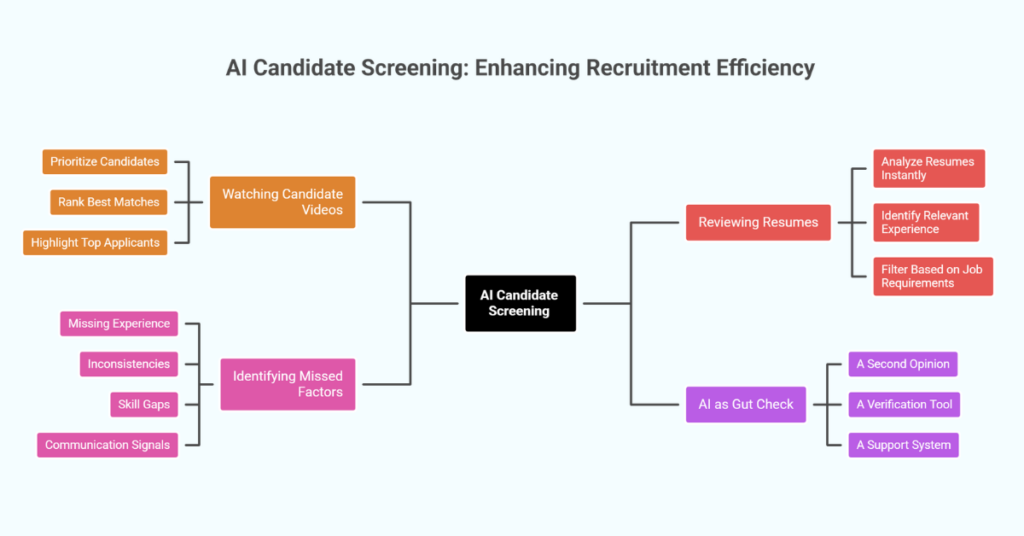
Remote Recruit is built to support employers and job seekers in offshore hiring through a structured video-based hiring approach combined with intelligent screening. For employers, the platform provides verified video profiles that allow hiring teams to assess communication skills, authenticity, and cultural fit before interviews. This reduces hiring risk and saves time by filtering out unsuitable candidates early.
Remote Recruit also integrates AI-driven matching to surface relevant offshore talent while maintaining fairness and consistency. Employers can confidently hire across regions without relying solely on resumes or assumptions. For job seekers, Remote Recruit offers a chance to stand out beyond traditional applications. Candidates can present their experience and personality directly through video, which is especially valuable for professionals in offshore or emerging markets.
By verifying employers and candidates, Remote Recruit creates a trusted hiring environment. The platform balances technology with human insight, ensuring offshore hiring is efficient, transparent, and built for long-term success.
Conclusion
Hiring offshore talent offers significant advantages, but it also introduces risks that traditional recruitment methods struggle to manage. Video-based hiring helps address these challenges by bringing clarity, authenticity, and human connection into the hiring process. Employers gain deeper insight into communication skills, cultural fit, and motivation before making decisions. This reduces costly hiring mistakes, shortens hiring cycles, and improves team performance.
As offshore and remote work continue to grow, employers who rely only on resumes and written screening will face increasing challenges. Video-based hiring provides a practical and scalable solution that aligns with how modern teams operate. Platforms like Remote Recruit make it easier for employers to adopt this approach without sacrificing speed or quality. By choosing to Hire Offshore with Video-Based Hiring, organizations can build stronger global teams with confidence, trust, and long-term success.
Frequently Asked Questions
What does it mean to hire offshore with video-based hiring?
It means using video responses and profiles as part of the hiring process to evaluate offshore candidates for communication, authenticity, and cultural fit before interviews.
Why is video-based hiring important for offshore roles?
Offshore roles depend heavily on communication and trust. Video-based hiring helps employers assess these qualities early and reduce hiring risk.
Can video-based hiring reduce fake or inflated applications?
Yes. Video responses make it easier to spot inconsistencies between resumes and real experience, reducing the impact of resume inflation and AI misuse.
Is video-based hiring suitable for large-scale offshore recruitment?
Yes. Video-based hiring supports asynchronous review and scales efficiently when combined with AI screening tools.
How does Remote Recruit support video-based hiring for offshore talent?
Remote Recruit provides verified video profiles, AI-powered matching, and employer validation to ensure safe, efficient, and effective offshore hiring.